

In this Issue
- Apple, Pear: codling moth updated dates, San Jose scale dates, woolly apple aphid update, bitter pit
- Peach, Apricot, Plum: peach twig borer updated dates, earwigs, cat-facing injury, greater peachtree borer
- Berries: grape leafhopper
APPLE, PEAR
Codling Moth
Provide continuous protection of fruit until Sept. 15
View a pdf of the spray timing table. (Note that some dates are in italics because they are past dates.)
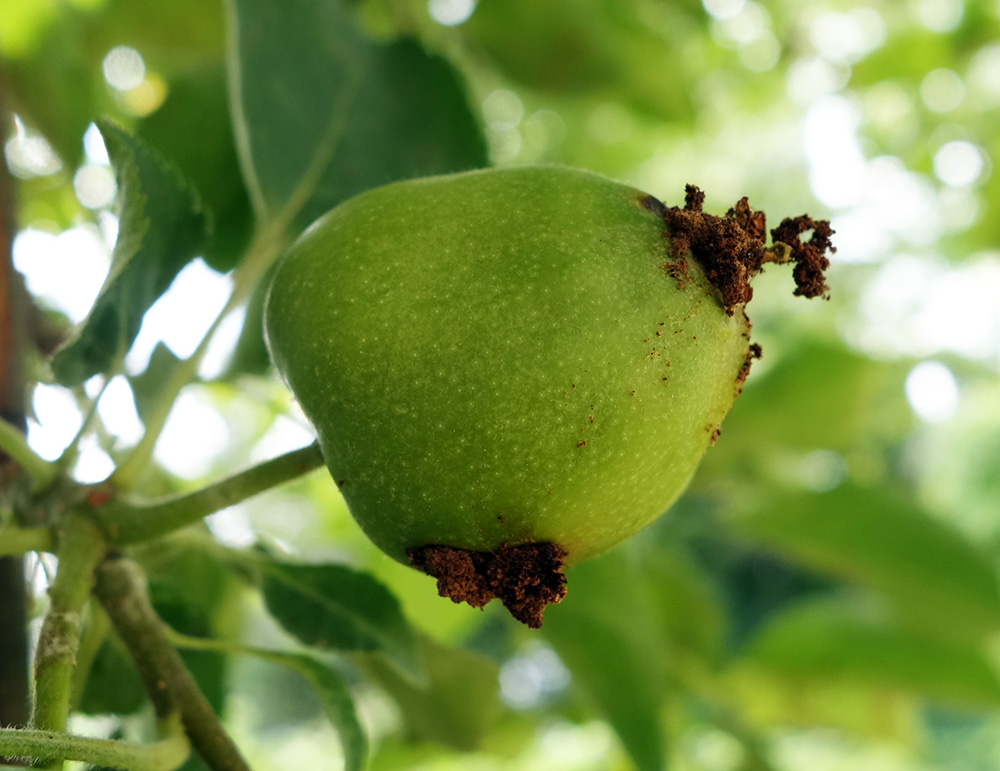
The codling moth life cycle in most locations of northern Utah is in the “middle” of the second generation egg hatch, at the point where eggs are rapidly hatching.
Although egg hatch for this generation will be ending in early to mid August, note that there is generally an overlap with the start of the third generation egg hatch. Therefore, where you have seen damage in the past, be sure to keep fruit protected continuously through September 15. After that point, codling moth eggs are not able to continue developing and the adult moth population diminishes.
See the May 5, 2025 advisory for treatment options.
San Jose Scale
If present, treat for second-generation crawlers
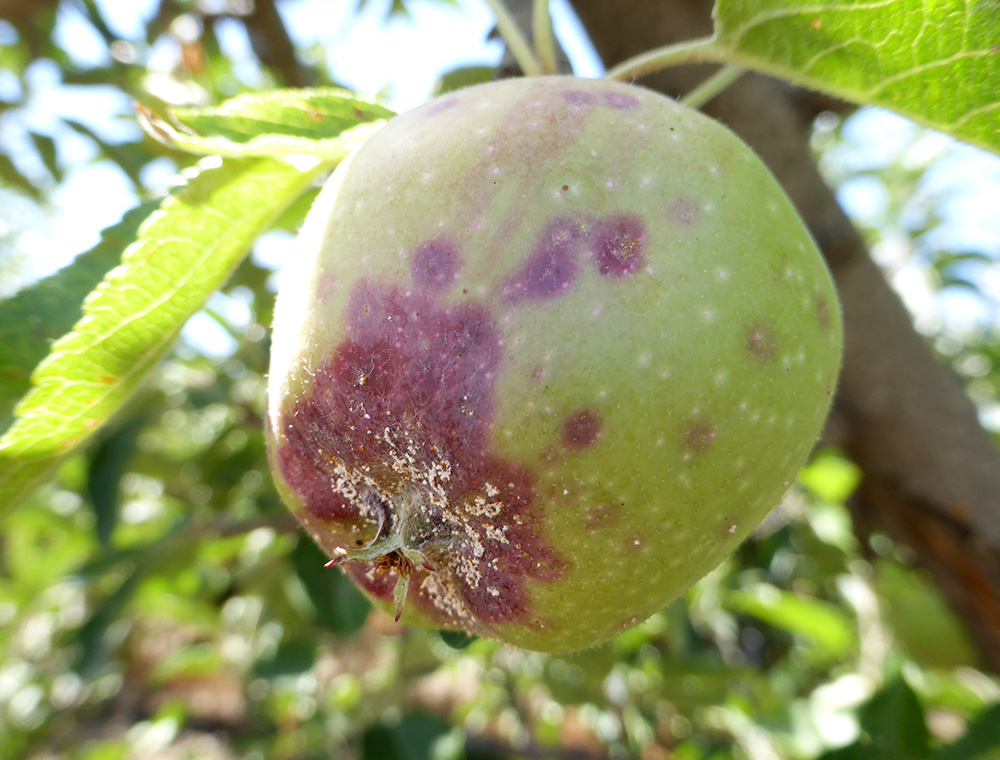
If you have been battling the insect, San Jose scale, now is the time to treat for the second generation of crawlers.
This pest is usually treated primarily with a dormant oil spray and with an insecticide application of the first crawler emergence. But for heavy infestations, or where you missed the window for the first emergence, consider a treatment now or at the timing below.
- Beaver, Morgan, Wasatch, counties: July 21 – 25
- Cache County: August 2 – 6
- Iron County: August 8 – 13
- All other Wasatch Front and Back counties: now
Treatment
One spray is all that is necessary.
For residential application, use insecticidal soap or your normal codling moth spray, mixed with 1% horticultural oil. Apply in the evening or early morning so that hot temperatures does not allow oil to damage the foliage.
For commercial application, mix 1% oil with Esteem, Sivanto Prime, Assail, or Centaur.
Woolly Apple Aphid
Monitor for cottony colonies especially on twigs or branch wounds
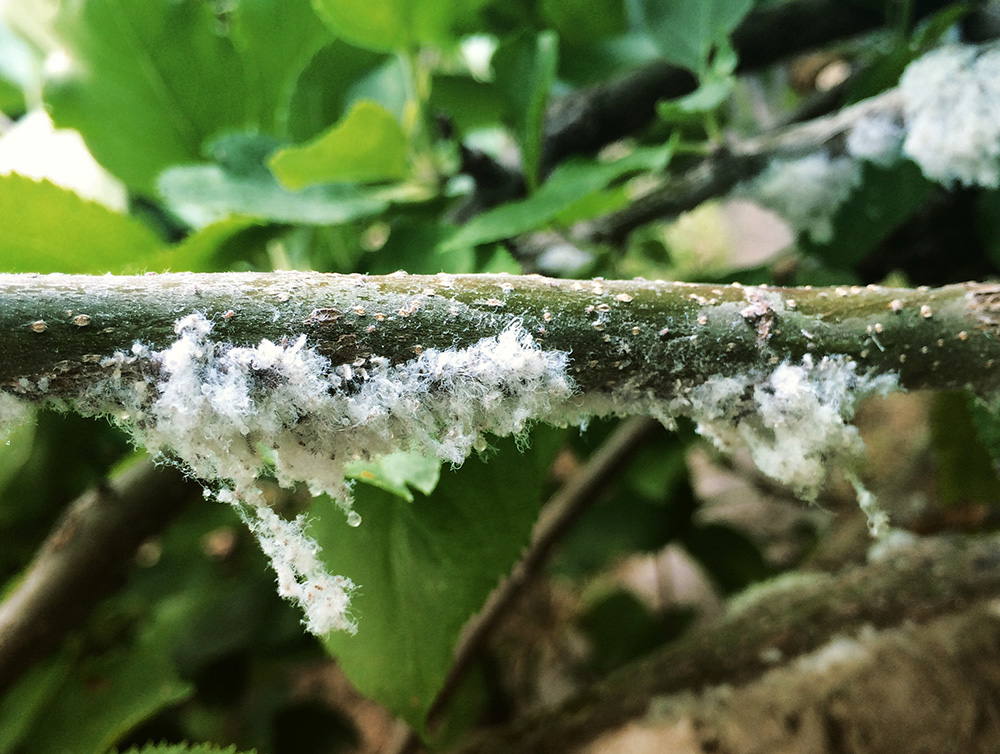
Woolly apple aphid populations have been rapidly increasing through July. They feed on the bark of the trunk, scaffold limbs, and succulent twigs, as well as on tree roots. They are most common in trees that are not regularly sprayed.
Treatment
If woolly apple aphids have increased to the point of covering more than 10% of the tree, they should be treated. Because of their waxy/fluffy coating, it is important to spray trees to drip to allow the insecticide to be effective. Mixing in 1% oil will help the insecticide penetrate into the colonies. And the following year, be sure to target them early in the season (late May).
- Residential growers can use insecticidal soap+1% oil (organic), or mix 1% oil with Spectracide Triazicide or GardenTech Sevin, aimed directly at the colonies. Some people have had success with “blasting” them with a strong jet of water, repeated every few days until gone.
- Options for commercial growers
Spider Mites on Pear
Check undersides of leaves for tiny moving mites and shiny eggs
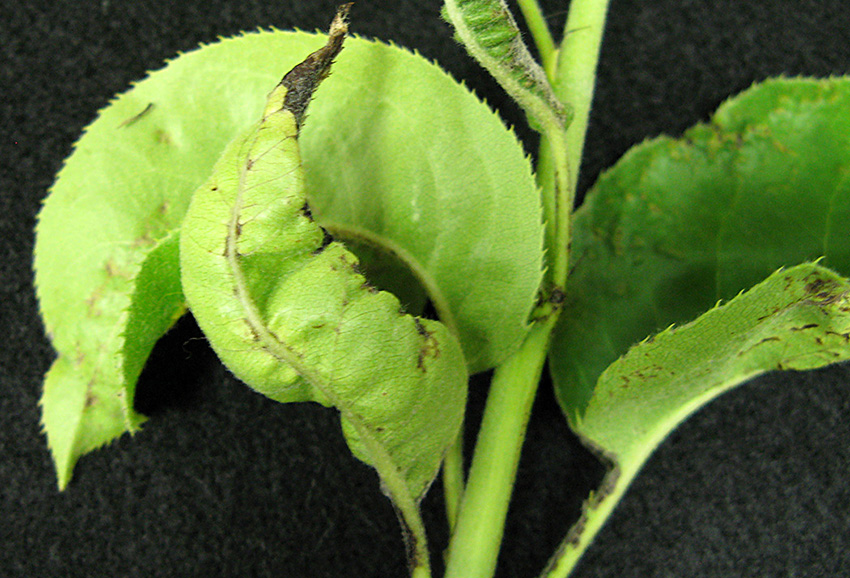
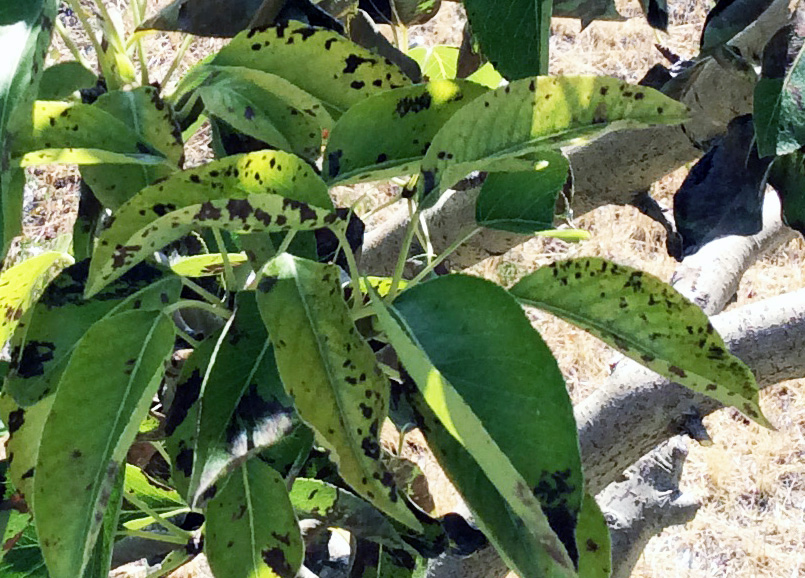
Spider mites are tiny organisms that feed on the undersides of the leaves and require a hand lens to see. In the July 3, 2025 advisory, we wrote about spider mites on apple, peach, and cherry. Spider mites can also affect pear, but the symptoms are much different.
Pear leaves are affected by even a small amount of mite feeding. Leaves will turn a blotchy dark brown to black, especially if there is heavy feeding over a short period of time. In addition, new foliage may also be affected, even if mites are not present. This foliar damage is related to reduced water content of leaves. It may resemble fire blight or pear psylla feeding. Mite injury is more evenly spread through the tree, and lacks the the typical shepherd’s crook symptom associated with fire blight.
Other problems with spider mite feeding on pear include reduced fruit set the following year, reduced fruit size, and increased pre-harvest fruit drop. In addition, fruit finish may be affected by late summer infestations. The following varieties are listed from highest to lowest susceptibility: `Anjou’, `Bosc’, `Bartlett’, and `Comice’.
The recommended action threshold for pears is very low: an average of 1 spider mite per leaf.
Treatment
- Residential growers can use 1% oil (of any type). Be sure to cover bottoms of leaves. A second application 1 week later may be warranted. Apply at night when temperatures fall below 85F to prevent oil from damaging foliage.
- Options for commercial growers: click here.
Bitter Pit
Calcium sprays can prevent
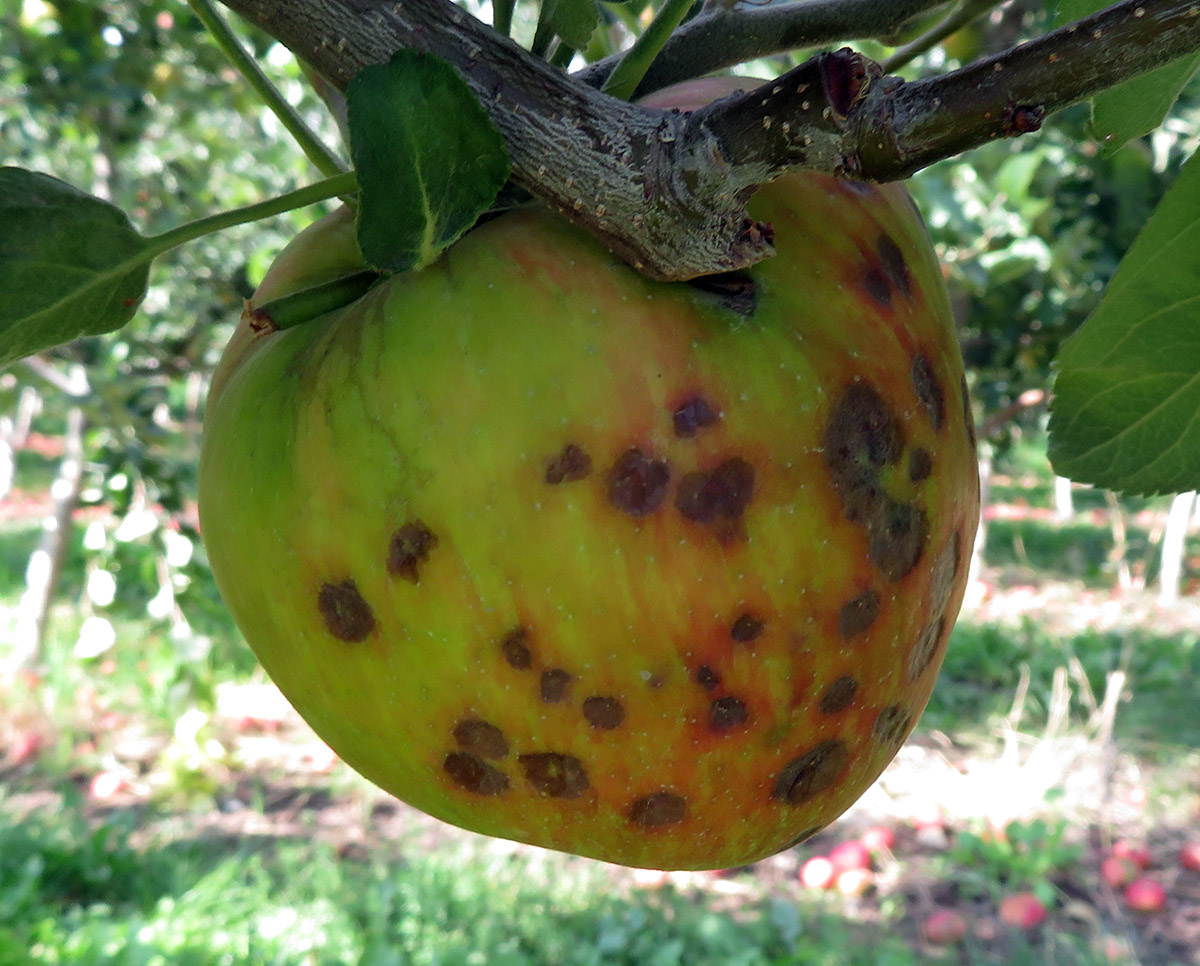
Lack of calcium in apple fruits can result in a physiological disorder known as bitter pit. The symptoms are sunken, brown lesions on the skin and into the flesh, located mainly on the calyx (bottom) end. Lesions become worse after storage, turning dark brown to black.
Bitter pit usually occurs on trees with low fruit set, excessive vigor, irregular soil moisture, or on certain varieties. Honeycrisp, Granny Smith, Golden Delicious, Mutsu, Gravenstein,Yellow Newtown, and Jonathan are among the more susceptible varieties, although almost any young, extremely vigorous tree may exhibit symptoms.
Calcium sprays (calcium chloride, calcium nitrate, STOP-IT, Nutri-Cal, Miracal, etc.) have been shown to reduce bitter pit symptoms. Ideally, sprays should be spaced throughout the season, starting 1-2 weeks after bloom and continuing monthly until harvest.
However, if bitter pit has been a nagging problem in your orchard and you have not applied calcium yet, consider 1-2 calcium sprays on expanding fruit before harvest (target the fruit, not the foliage). In some studies, calcium in the form of calcium nitrate has shown to work better when applied as late sprays (do not spray at temps above 80-85°F).
Avoid spraying Crispin and Golden Delicious with calcium nitrate, since fruit damage may result.
After harvest, a 4% calcium chloride dip is also effective. Store fruit immediately and wash before eating. (Note that calcium chloride is corrosive to metal.)
For the best bitter pit prevention, an integrated approach of the following cultural practices is important:
- Avoid wide fluctuations in soil moisture
- Do not over-fertilize to avoid vigorous growth and over-sized fruit do not over-prune
- Try to prevent biennial bearing through proper thinning and pollination practices
- Harvest at optimal timing because late harvested fruit is more prone to bitter bit
PEACH, NECTARINE, APRICOT, PLUM
Peach Twig Borer
View a pdf of the spray timing table. (Note that some dates are in italics because they are past dates.)
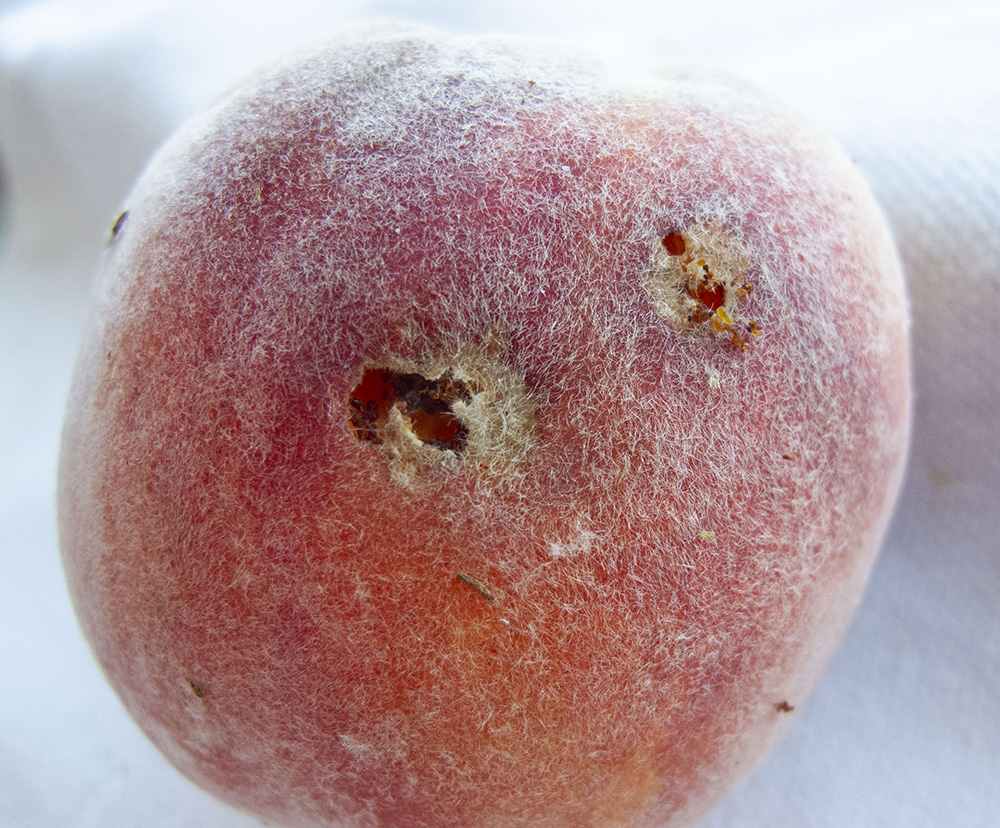
Some folks are reporting damage from peach twig borer this year, so be sure to keep fruit protected where you know this pest occurs. Most northern Utah locations are still in the midst of second-generation egg hatch, to be ending from early to late August. There will be a third generation that should be treated in late August, to carry the fruit over to September 15.
Treatment
Residential:
The option you are using for codling moth and/or cherry fruit fly can also be used for peach twig borer.
- Conventional options include Spectracide Triazicide; GardenTech Sevin, others
- Organic options include products containing spinosad; Safer BioNeem; Safer End All Plus Neem; Ortho Fruit Spray or other products containing pyrethrin.
Commercial:
- If harvest will be occurring on early peaches, select a material that has a shorter pre-harvest interval, such as Assail, Intrepid (7-day PHI), or Entrust (1-day PHI).
- Options for can be found here for peach, and here for apricot
Earwigs
More damaging on ripening fruit
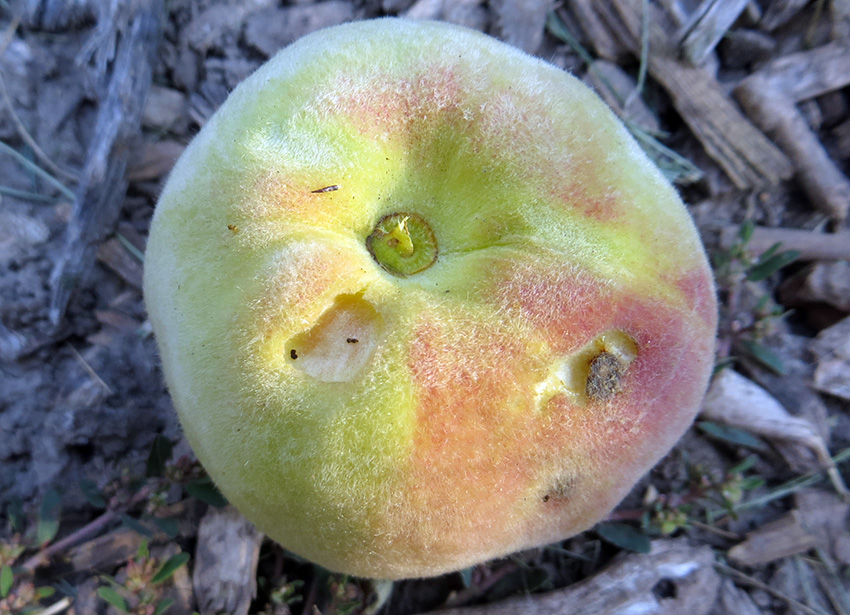
Earwigs are active in fruit trees now, but while fruits are still hard, they are mostly feeding on foliage or other insects. Once fruit starts to soften, earwigs chew small but deep pits into the fruit flesh. They can also enter fruits through existing openings or cracks. Their feeding introduces bacteria and decay fungi that can render the fruit inedible.
Earwigs are active at night, but close examinations of fruit (especially split-pits) will determine if earwigs are present. Look for small black dots (frass).
Treatment
To manage earwigs, use a variety of options:
- Trap regularly. For small farm or backyard situations, regular trapping is a highly effective tool. Traps made with smelly oil work particularly well. A small container (plastic or tuna can-type) would be filled with about a half inch of fish oil, bacon grease, or a mix of soy sauce plus cooking oil. Place the container on the ground in hot spots and clean them out and refill daily until very few are captured. Other trap options include rolled-up news-paper; rolled up corrugated cardboard; bamboo sticks; or short pieces of hose. These types of traps can be thrown out and replaced each morning. Options are: cat food or tuna cans, with 1/2-inch of fish or bacon oil in the bottom; rolled-up newspaper; rolled up corrugated cardboard; bamboo sticks; or short pieces of hose. Place traps on the soil or wrapped around the tree trunk and empty traps into soapy water, or change them out, daily. Continue until you are no longer catching earwigs.
- Sanitation. Keep mulch away from trees, remove weedy growth or groundcovers from the base of trees. Remove tree suckers or any limbs touching the ground. Remove loose bark on fruit trees where earwigs can hide.
- Pick fruits as soon as they start to ripen.
- Insecticides. Spinosad kills earwigs when they feed on it. It can be used either as a spray (many brands) or bait sprinkled at the base of trees (Sluggo Plus). (In this method, the bait must be used before the earwigs enter the tree. Otherwise, sprinkle bait in tree crotches.) Carbaryl (Sevin, others) can also be used, applied to the tree trunk and scaffold limbs, but again, it must be applied as soon as earwigs are starting to enter the tree. Both options have shown good control for earwigs, and have short PHI’s. Other granular baits are also available.
Cat-facing Damage
Monitor for stink bugs
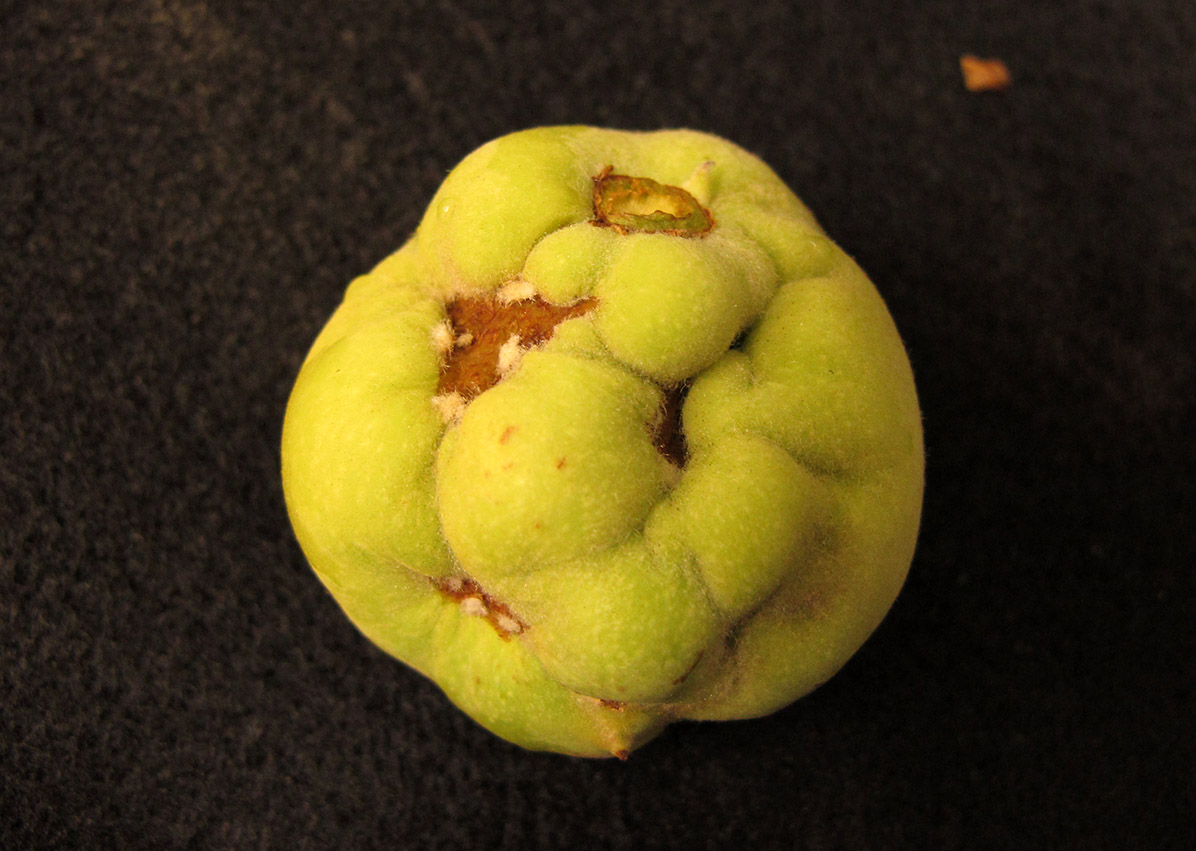
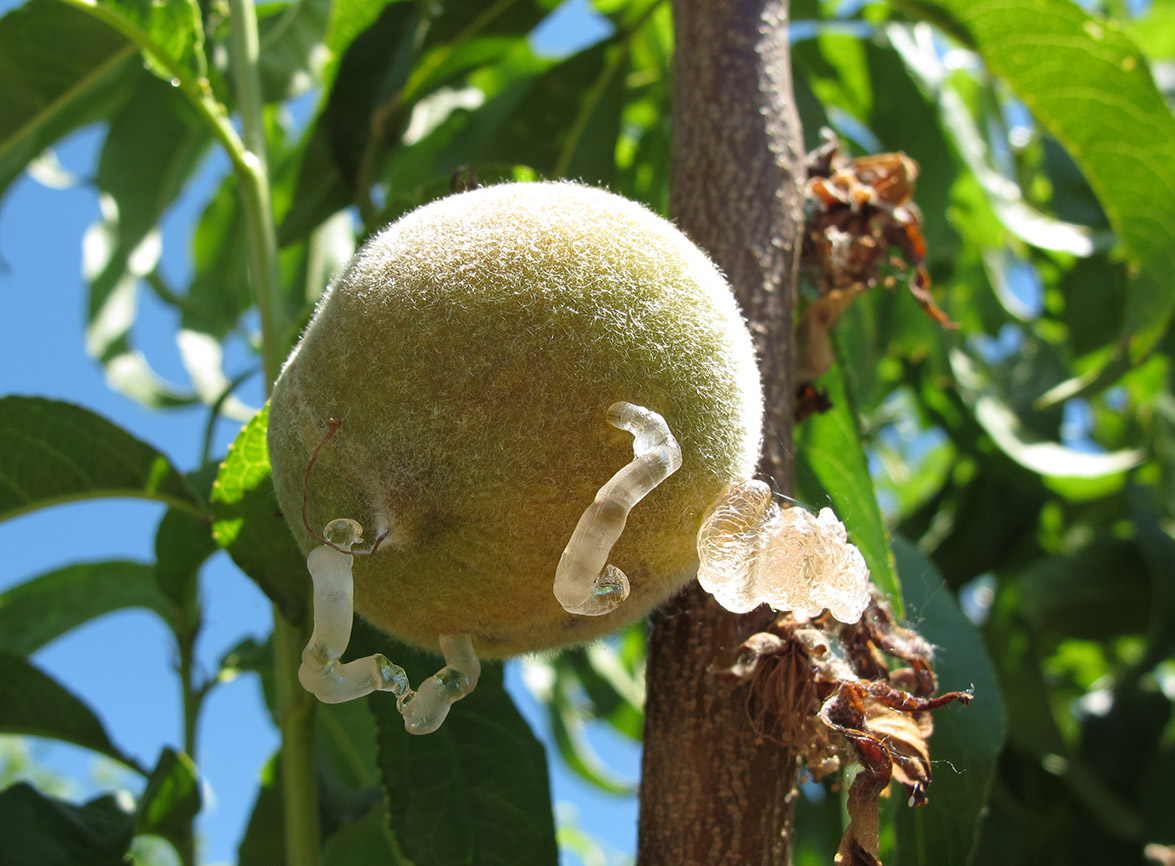
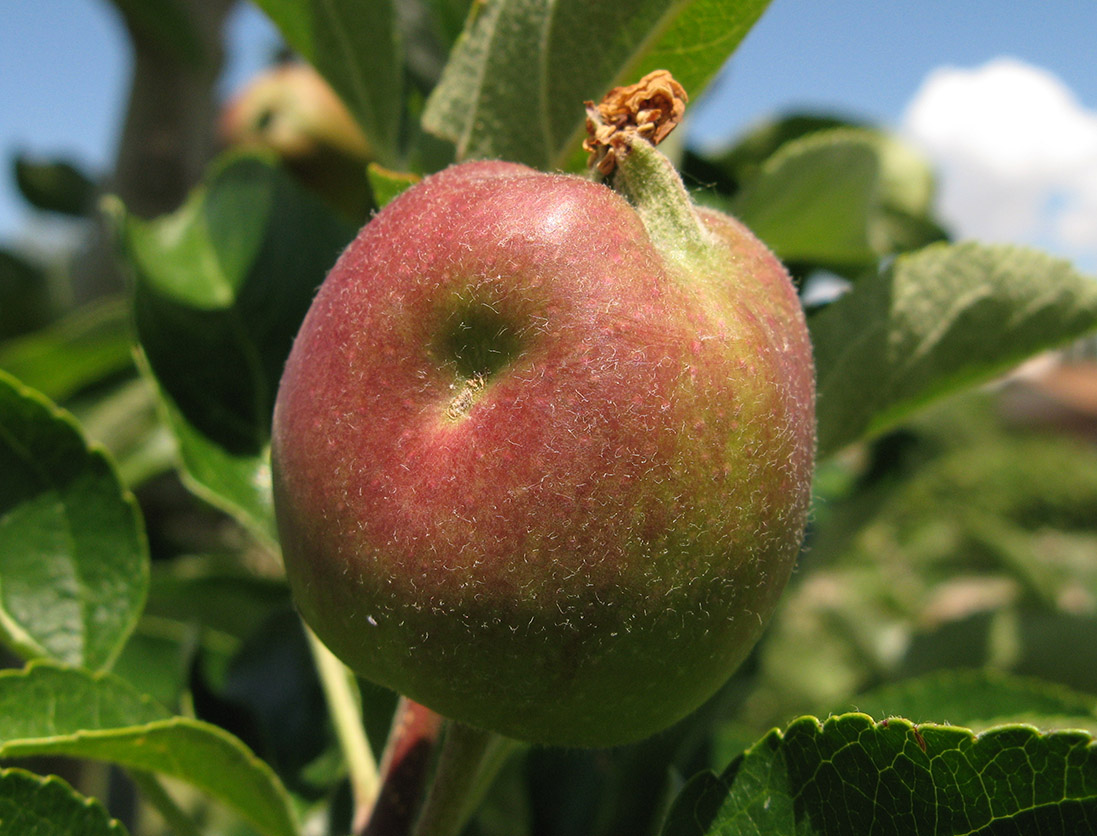
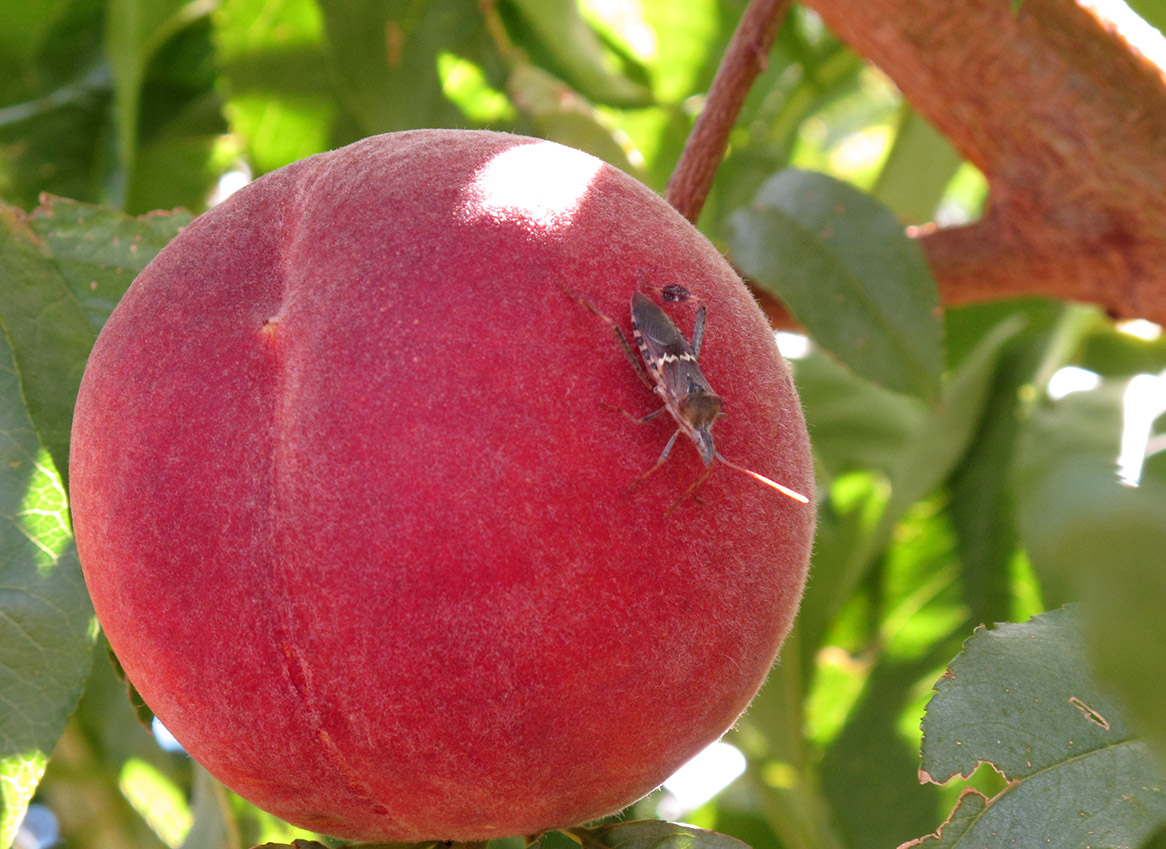
Cat-facing injury on fruits is a generic term used to describe a symptom caused by feeding of true bugs (lygus, stink bugs, and others). True bugs feed by inserting their proboscis into the fruit flesh. They excrete a salivary enzyme that breaks down the cells, and then suck up the dissolved food juices. The area of the skin killed by feeding does not grow, and becomes sunken as the rest of the fruit matures, resembling a “cat face.” Although true bugs are considered minor pests, most commercial and residential orchards will see a certain level of damage each year, mostly on peaches.
The fruit damage will look different depending on when the feeding occurred. Severely dimpled fruit indicates that feeding occurred earlier in the season. Early to mid-season feeding will cause strings of oozing gum and sometimes, a water-soaked appearance. Feeding closer to harvest does not cause gumming, and may not be noticeable until later, when the flesh appears brown and corky or even decayed. Sometimes, injury does not show up until fruit is brought out of storage.
Most true bugs overwinter as adults, and they can feed early in the season on very young, developing fruit. They then leave the orchard for other plants (alfalfa, weeds) to breed and feed until later in the season.
Our hot, dry conditions is conducive to stink bug damage because they move to the orchard when groundcovers dry up or when alfalfa is cut. Their highest population in the orchards occurs during fruit ripening.
Treatment
For the most part, stink bugs do not warrant an insecticide application and in fact, sometimes the cost of an application (labor, materials, and loss of beneficials) outweighs the minor fruit losses from stinkbug injury.
- Scout for adults throughout the season to help determine which true bug is most common in your tree or orchard.
- If your orchard is bordered by lots of weedy areas, watch closely for signs of feeding damage on the fruit. By late-August, stink bugs move on to overwintering sites.
- If possible, remove weed hosts in the orchard (mullein, ironweed, horse-weed) or keep them mown within and on orchard edges.
- The most effective products on adult true bugs are the broad spectrum insecticides (carbaryl, synthetic pyrethroids, and the organic, pyrethrin). Only consider a treatment if it is worth the harm of killing beneficial insects that may be feeding on other pests. Often the cost of an application (labor, materials, and loss of beneficials) outweighs the minor fruit losses from stinkbug injury.
Greater Peachtree Borer (For Backyard Growers)
Continue protection of trunk through mid-October
Continue to maintain protection of the lower trunk of peach/nectarine and apricot (where necessary) with your last treatment around September 15 (so that the trunk is protected through Oct 15). When you spray, be sure to move mulch or weeds away from the trunk (or even excess soil) because sometimes eggs are laid below grade.
This fall or next spring, determine the success of your treatment program by inspecting your trees. Remove dirt from around the base of the tree down to about 4 inches. Look for oozing gum mixed with frass. If you find any symptoms, you will know that you need to improve your control program for next year.
Treatment
Residential growers can use Hi Yield Permethrin, Sevin, Spectracide Triazicide, or for organic control, products containing spinosad.
Coryneum Blight
Rains can bring on infections of fruit
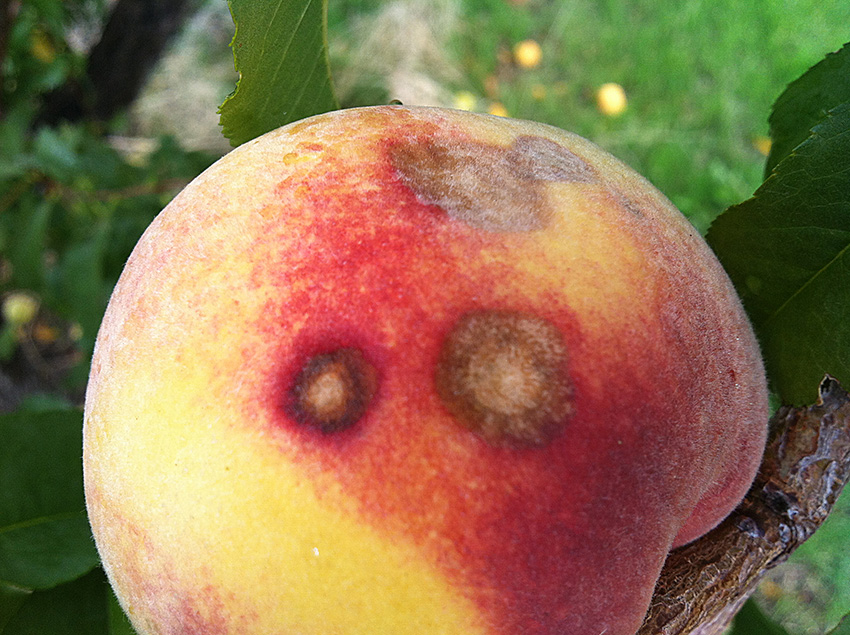
August often brings thunderstorms with heavy downpours. These types of storms increase the risk of late-season coryneum infections on ripening peach fruits.
These infections look different from early-season infections and are circular and soft. They become visible on maturing fruit in a matter of 2 to 5 days, and most often, render the fruit inedible and unmarketable. Additional infections can spread rapidly within an orchard or individual tree. Sometimes, the damage will not show up until after picking.
Protection against late season infections on ripening fruit is particularly important where there is a history of this disease. During the three to four weeks before harvest, be diligent about monitoring your fruit, and apply a protective fungicide before a forecasted rainfall (ideally).
Treatment
- Residential growers can use Spectracide Immunox, Monterey F-stop, Fertilome Fungimax, or Captan.
- Commercial growers options: click here.
CHERRY
Western Cherry Fruit Fly Post-Harvest
Don’t forget about the fruit left on the tree
Cherry fruit fly egg-laying actually peaks AFTER harvest, and untreated fruit that remain on the tree represent a source of infestation the following season. In commercial orchards, apply an insecticide such as imidacloprid (Admire Pro, or generics) within seven days after harvest to reduce fly populations for the following year, especially in orchards with high post-harvest catches. Dimethoate plus 1% oil is another option.
For backyard trees, please remove and destroy all fallen fruit, and if possible, pick your cherry trees clean to remove egg-laying sites for late-emerging fruit flies. Please play your role in keeping your trees clean of this pest that can devastate a commercial growers’ crop.
SMALL FRUITS
Grape Leafhopper
Monitor for nymphs starting in early August
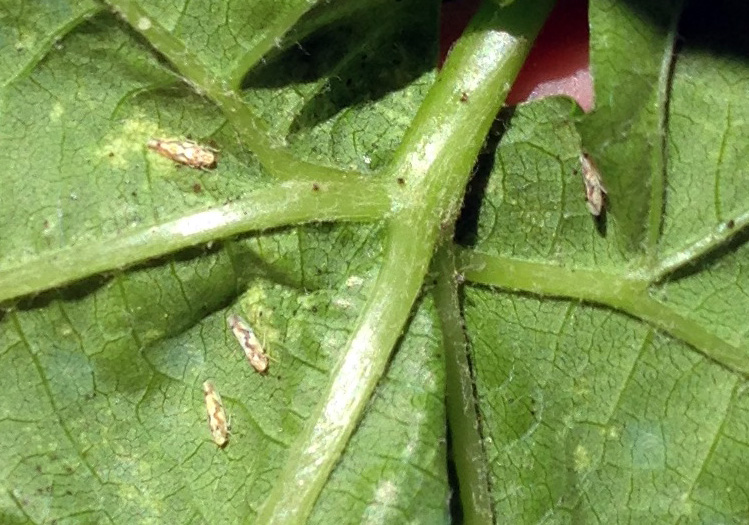
The western grape leafhopper is sometimes mistaken for a whitefly in late August, when hundreds of flying adults are present in grape plants.
If this pest has been a problem in the past, do not wait. In early August, nymphs of the summer generation will visible on the undersides of foliage. Nymphs don’t have wings and are much more susceptible to treatment.
Scout for them by turning leaves over and looking for rice-shaped, cream-colored insects along the leaf veins.
Grape leafhoppers spend the winter as adults on weeds or groundcover near grape plants. Eggs are laid inside foliage and hatch in late May, with egg-laying adults present in late June.
Nymphs and adults damage foliage by extracting sap and chlorophyll, leaving behind white stippled areas. With heavy feeding, the foliage may become speckled with dark excrement or become scorched. However, flying adults are especially a nuisance as you work in your grapevines.
Treatment
Plants can withstand a high population, and there are several beneficial insects that keep the population in check. A guideline for treatment is an average of 10 nymphs on 80% of the foliage.
- Residential: horticultural oil (1%, apply only when temperatures are below 85F), insecticidal soap, pyrethrin (Lilly Miller, Pyganic), carbaryl (Bayer Advanced Complete), Malathion
- Commercial: acetamiprid (Assail), pyrethrin (Azera, Pyganic, Tersus-good coverage is important), methomyl (Lannate), horticultural oil (1%)