

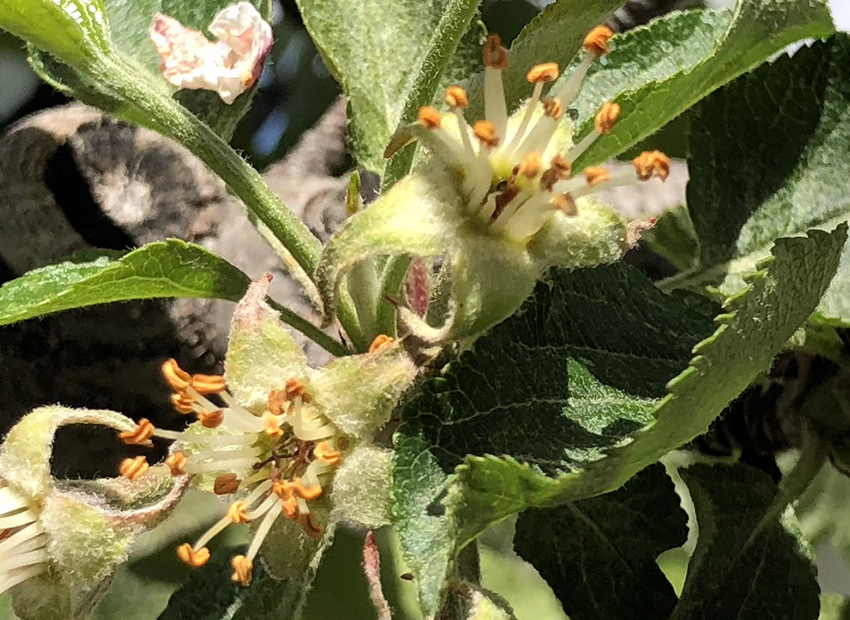
Temperatures are expected to drop to critical freezing values in many parts of northern Utah on Thursday and Friday this week. In most areas, flowering (except a few apples) is finished, with fruitlets already forming.
Because trees are at bloom or post-bloom, plant tissue is not able to handle cold temperatures. Researchers have tested fruit tissue in various stages of growth and determined the coldest temperatures that would kill buds, flowers, and fruitlets. For all types of fruit trees in northern Utah with blossoms or fruits:
- if the temperature drops to 28°F for just 30 minutes, potentially 10% of the flowers or fruitlets could be killed – this is manageable as most fruit trees cannot handle the full flower-load.
- if the temperature drops to 25°F for 30 minutes, 90% of the flowers or fruitlets could be killed.
You can refer to this fact sheet, “Critical Temperatures for Frost Damage” to review the pictures of crop stages and temperatures to determine if your own trees are at risk. As you watch your local forecast, note that weather stations that report temperatures might be warmer or colder than your area. No frost protection scheme will be perfect, and the costs range from minimal to the extreme.
Backyard Trees: Cloth Coverings
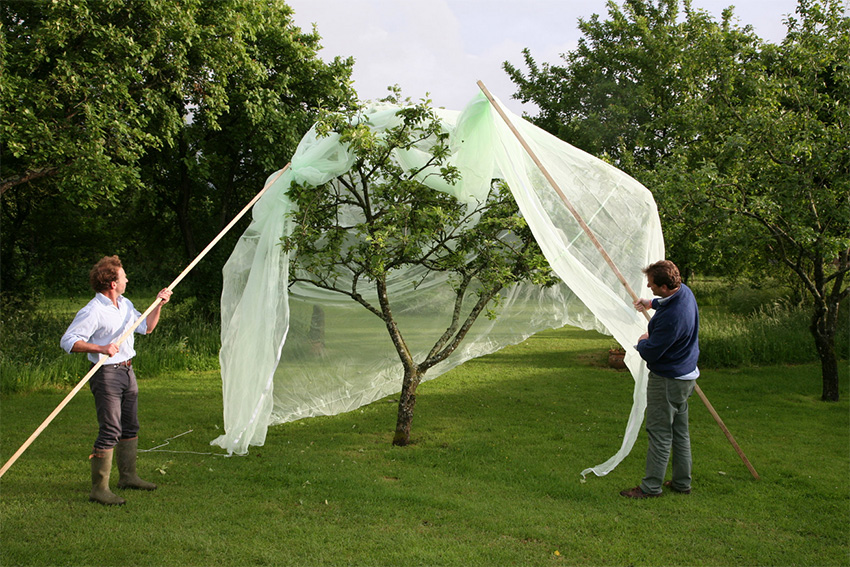
For backyard trees that are not too tall, covering is the best option.
What to Use
- A light sheet, burlap, or frost blanket.
- Do not use a plastic tarp because plastic is not a good insulator and tissues touching the plastic may still freeze.
- Make sure the covering is large and long enough to reach the ground so that it retains all the warmth under the cloth.
Before Covering
- If you are able to, irrigate the ground under the trees in the morning (Thursday) so that the wet soil will absorb heat during the day.
- Under the covering, you can increase the amount of warmth by hanging incandescent lighting that is rated for outdoor use, such as a 100-watt bulb or a light string with 7-watt bulbs.
Covering the Tree
- Apply the cloth during the afternoon (before temps cool) to trap existing warmth.
- Keep in mind that draping the cloth over the tree will require some patience and it may knock some flowers/fruitlets off.
- You may need to stake the cloth down.
- Do not remove the cloth until late in the morning the next day.
Backyard Trees: Other Options
If covering your trees with cloth is impractical (too tall, for example), other options are:
- Hang incandescent lights (see above).
- Water the root zone Thursday and Friday mornings to retain and release heat that night.
- Watch the temperature in your yard, and once it gets close to critical (approaching 27), turn on a barbecue grill located near the tree to the low setting, and let it run overnight.
Here is another good read for backyard trees from North Carolina Extension.
Water
Water is not a practical option for Utah. However, overhead irrigation can increase temperatures by 4-6 degrees, and under-tree irrigation by 1-3 degrees. Using water is one of the cheapest options, where it is available. The downside of using water is over-saturating the soil, leaching of nutrients, runoff, and water-use restrictions. The irrigation must continue until any ice that has formed melts, which could be many hours.
Larger Orchards: Propane Heaters
Orchard heaters can help to gain around 1-3 degrees in an orchard. This is one of the most expensive and least efficient options. In a larger orchard, they require lots of fuel and labor. About 40 to 60 heaters are needed per acre, each using about 1 gal of fuel per hour. Only about 10-15% of the heat actually stays in the orchard; the rest is dissipated. Heaters are best used in conjunction with wind machines.
Larger Orchards: Wind Machines or Helicopters
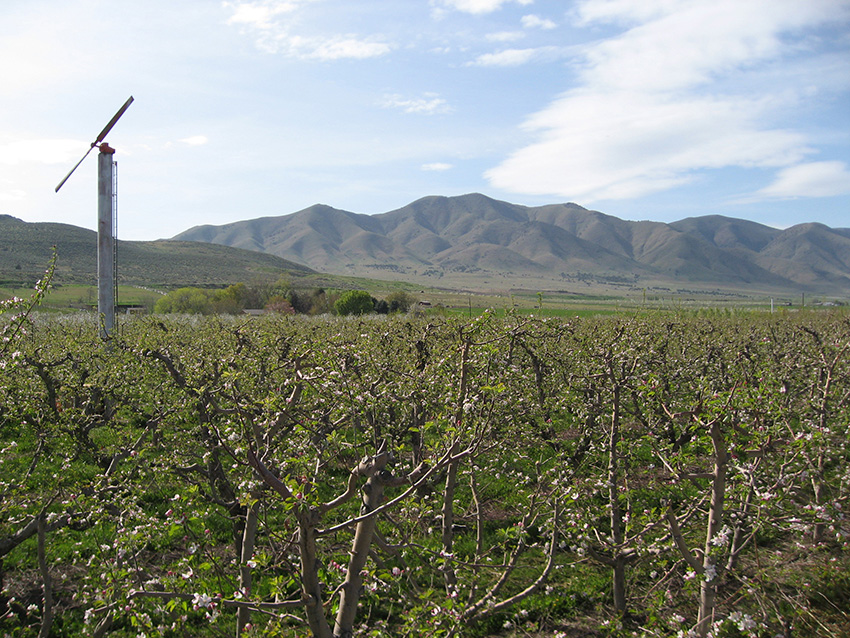
These devices mix warm air from above with cold air at tree level, and can help to gain around 1-4 degrees in an orchard. A wind machine covers about 10 acres, while a helicopter, although more expensive ($700- $2,000 per hour), can protect 40 acres, and can bring warm air down from higher levels.