In this Issue
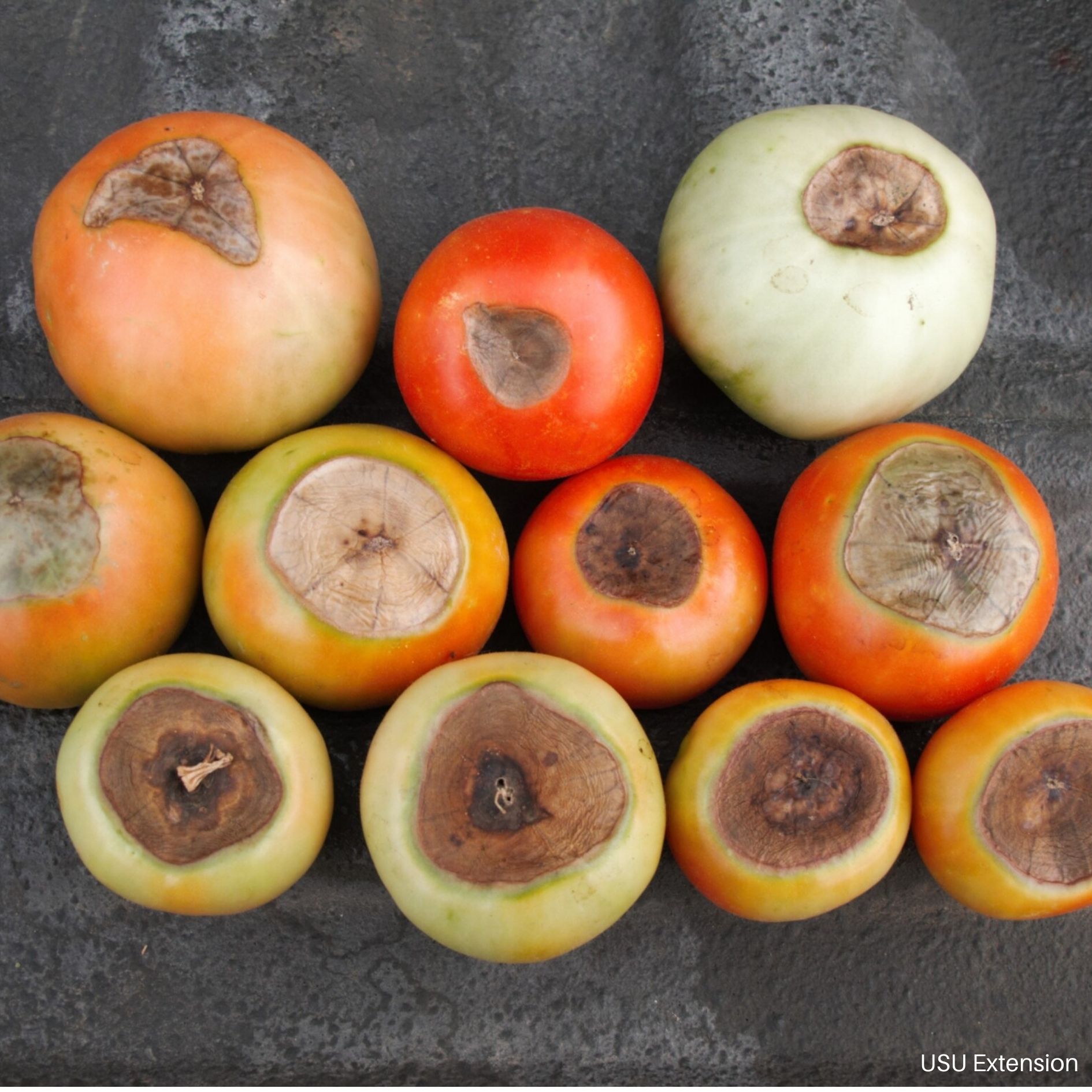
- Pepper, tomato, and watermelon: Blossom end rot is showing up now. Make sure plants are well watered. Remove affected fruit to allow other fruit to mature and reduce secondary infection.
- Cucurbits (cucumber, melon, pumpkin, and squash): We are seeing squash bugs hatching now in northern Utah. Scout crops weekly. Remove and destroy eggs, nymphs, and adults. Target nymphs when using insecticides.
- Corn: Corn earworm moths begin flight soon. Monitor carefully and spray as needed while silks are green.
- All Crops: European earwigs congregate in wet, shady areas and populations build in mid to late summer. Only control if crop damage is observed, as earwigs can be beneficial. Control with cardboard or oil traps. If populations are unreasonably high, target with insecticide in the evening when earwigs come out to feed.
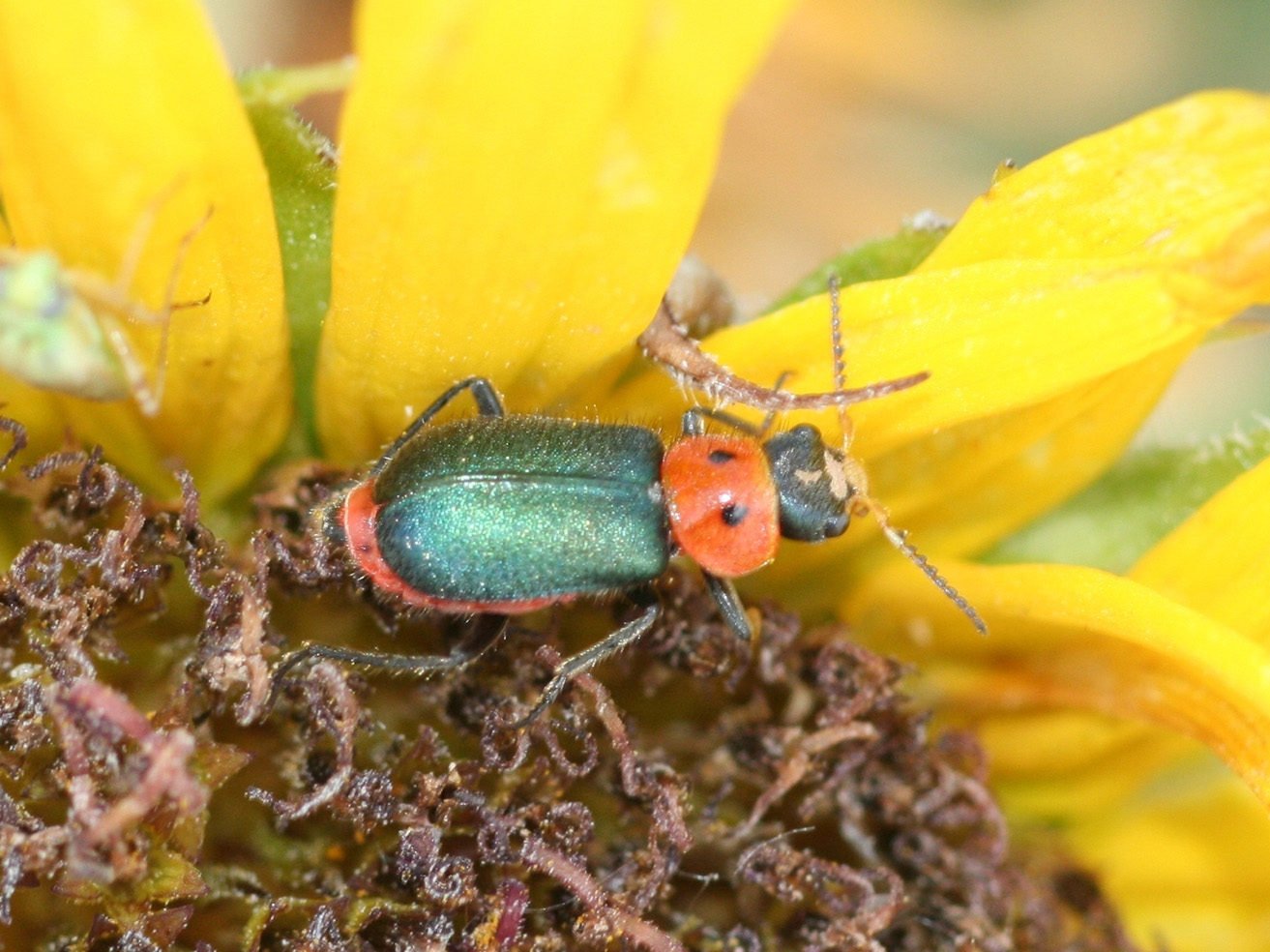
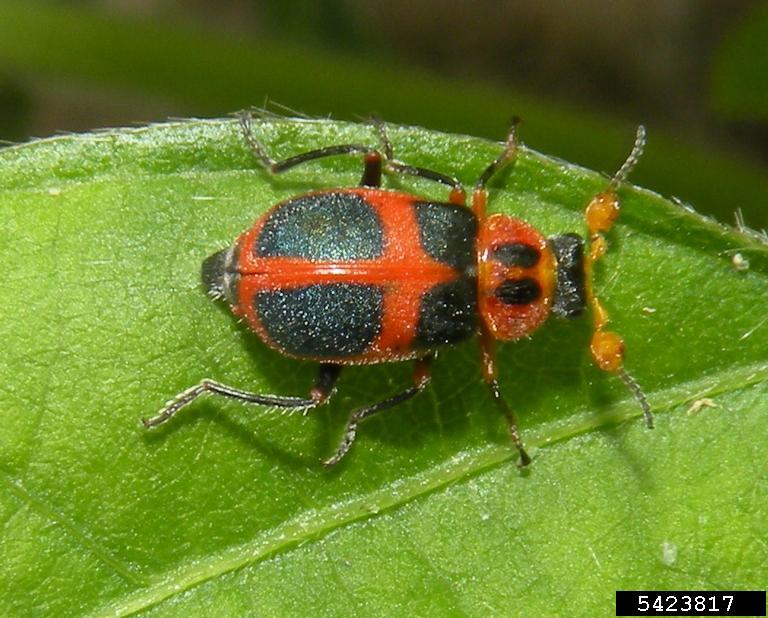
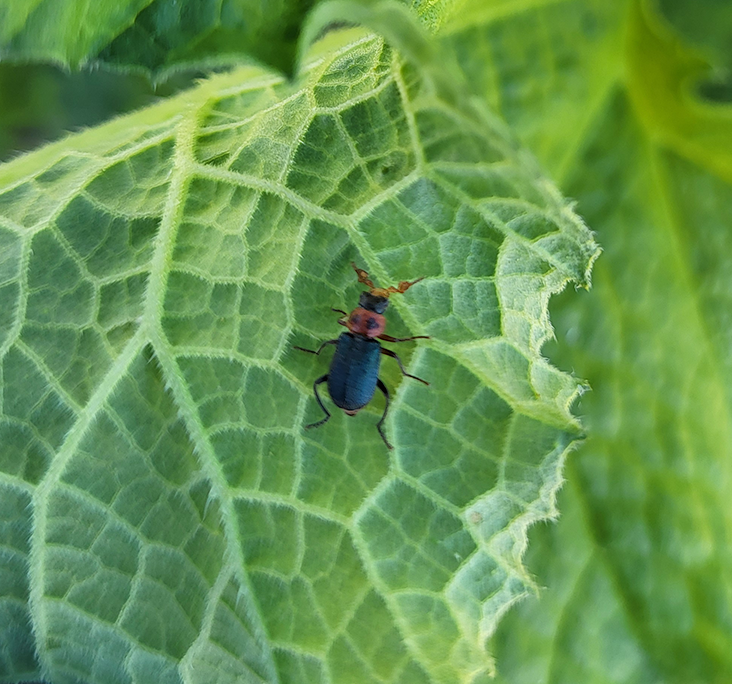
- Beneficial Insect Spotlight: Collops beetles have been spotted in pumpkin fields in northern Utah. To enhance beneficial insect populations consider reducing pesticide use and planting a variety of flowering plants that bloom throughout the season for habitat and food.
Blossom End Rot
Blossom end rot is showing up now. Make sure plants are well watered. Remove affected fruit to allow other fruit to mature, and to reduce secondary infection.
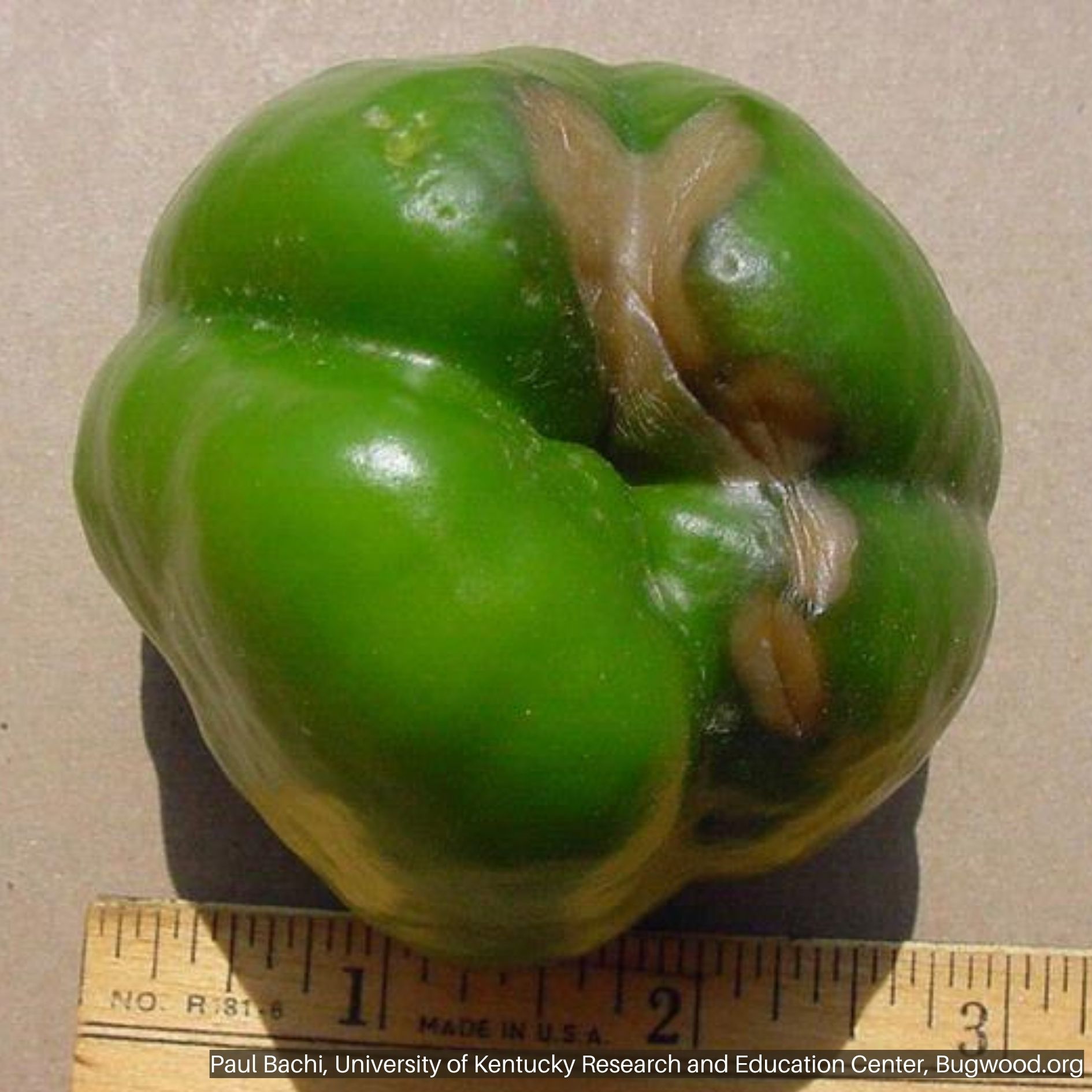
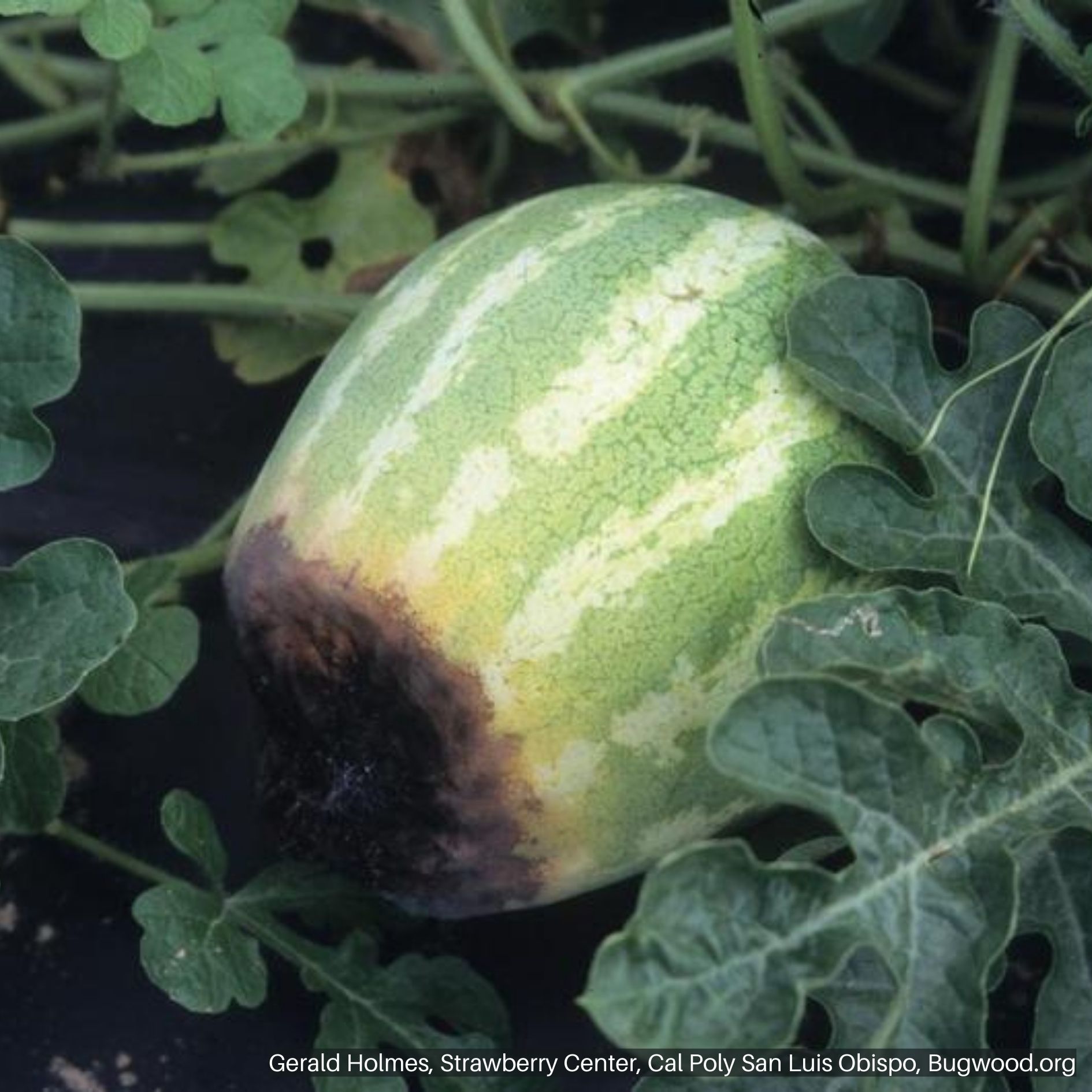
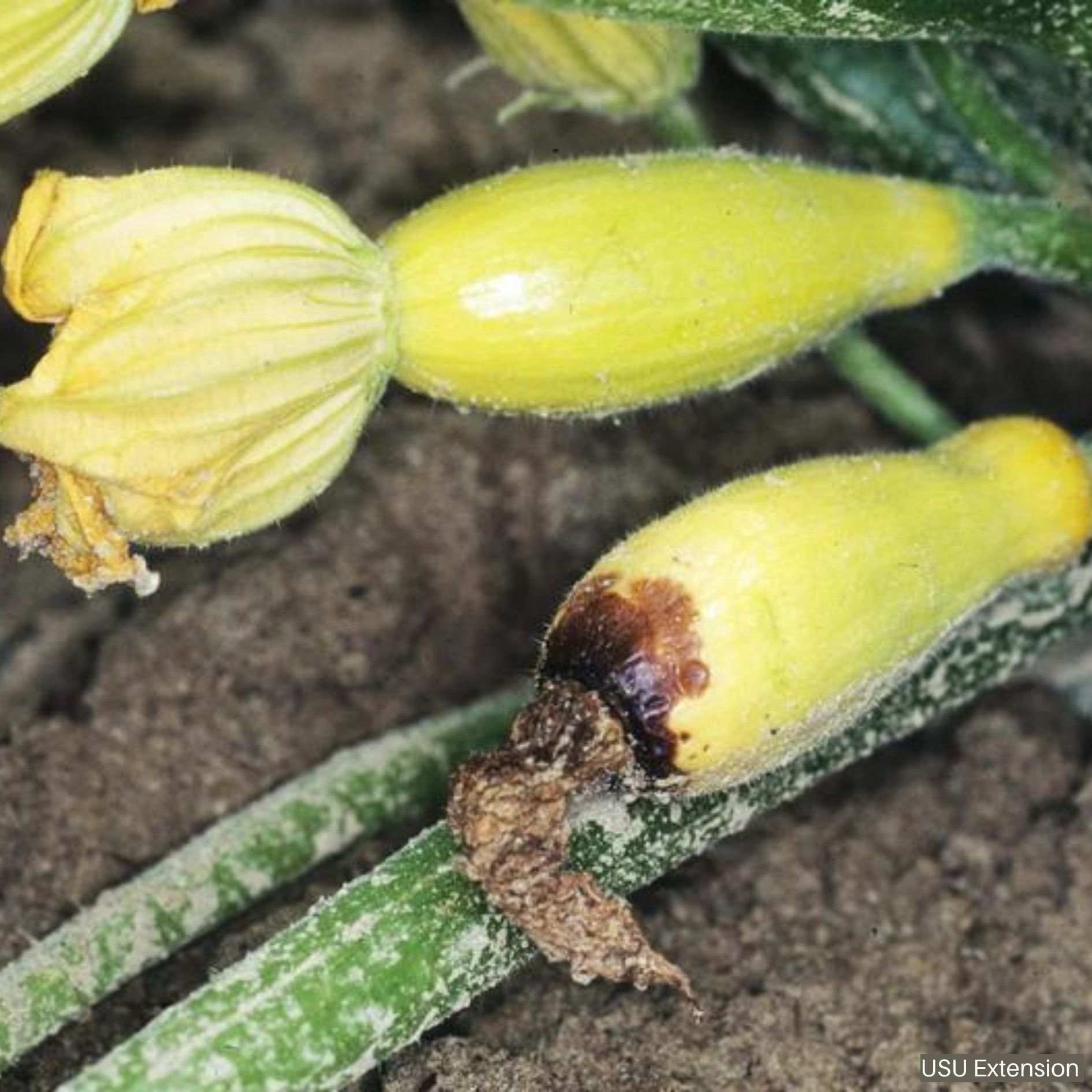
Crops Affected: Primarily pepper, tomato, and watermelon. Can also affect cucumber, eggplant, and squash.
Symptoms and Causes
Blossom end rot (BER) is an easily identifiable disorder in fruits of vegetable crops. The main symptom is a slight, water-soaked discoloration on the blossom end of the fruit (opposite of the stem). As the lesion enlarges it turns leathery and dark brown or black and often becomes sunken into the fruit. Bacteria and fungi may invade the lesion and change the appearance through secondary infection. While lesions are normally dry, a secondary infection can cause it to appear soft or watery or have a fuzz-like growth (fungal growth), or be cracked.
BER is caused by a shortage of calcium in rapidly growing young fruit. In Utah, where soils are generally high in calcium, this disorder is the result of low water levels in the root zone. Calcium is taken into the plant with water in the soil and is not mobile within the plant. During the day, leaf stomata are open and water transpires from them, drawing sap into the leaves. Since fruits do not lose much water by transpiration, they receive little of the calcium-containing sap. At night, the stomata close, root pressure forces sap into the plant, and the developing fruit get their share of calcium and other nutrients. If the plant is water stressed at night, the system fails and the fruit receives very little calcium which can lead to BER.
Excessive salts in the soil, including ammonium, potassium, and magnesium, can interfere with calcium uptake by plants and may also result in BER. Root damage caused by improper cultivation practices or excess soil water may also lead to BER. The incidence of BER varies by plant variety and is greatly influenced by environmental conditions.
Management
- There is no way to treat or cure a fruit affected by BER. Affected fruit should be removed from the plant to allow other unaffected fruit to grow and mature.
-
Water plants deeply and infrequently to avoid water stress and fluctuating soil moisture. Mulch (organic or plastic) around plants can help reduce wide fluctuations in soil moisture. Do not allow plants to be water stressed at night.
-
Avoid over-fertilizing plants and do not use ammonium-based nitrogen fertilizers. High fruit growth rates can increase the incidence of BER, and salts from fertilizer can interfere with calcium uptake.
-
Be careful when hoeing or cultivating near plants to avoid injuring roots. Pull weeds next to plants or use mulch.
-
Do not overwater, especially in heavy clay soils.
- Select varieties that are less susceptible to BER. Typically, faster growing and larger fruited varieties have a higher incidence of BER.
Squash Bug
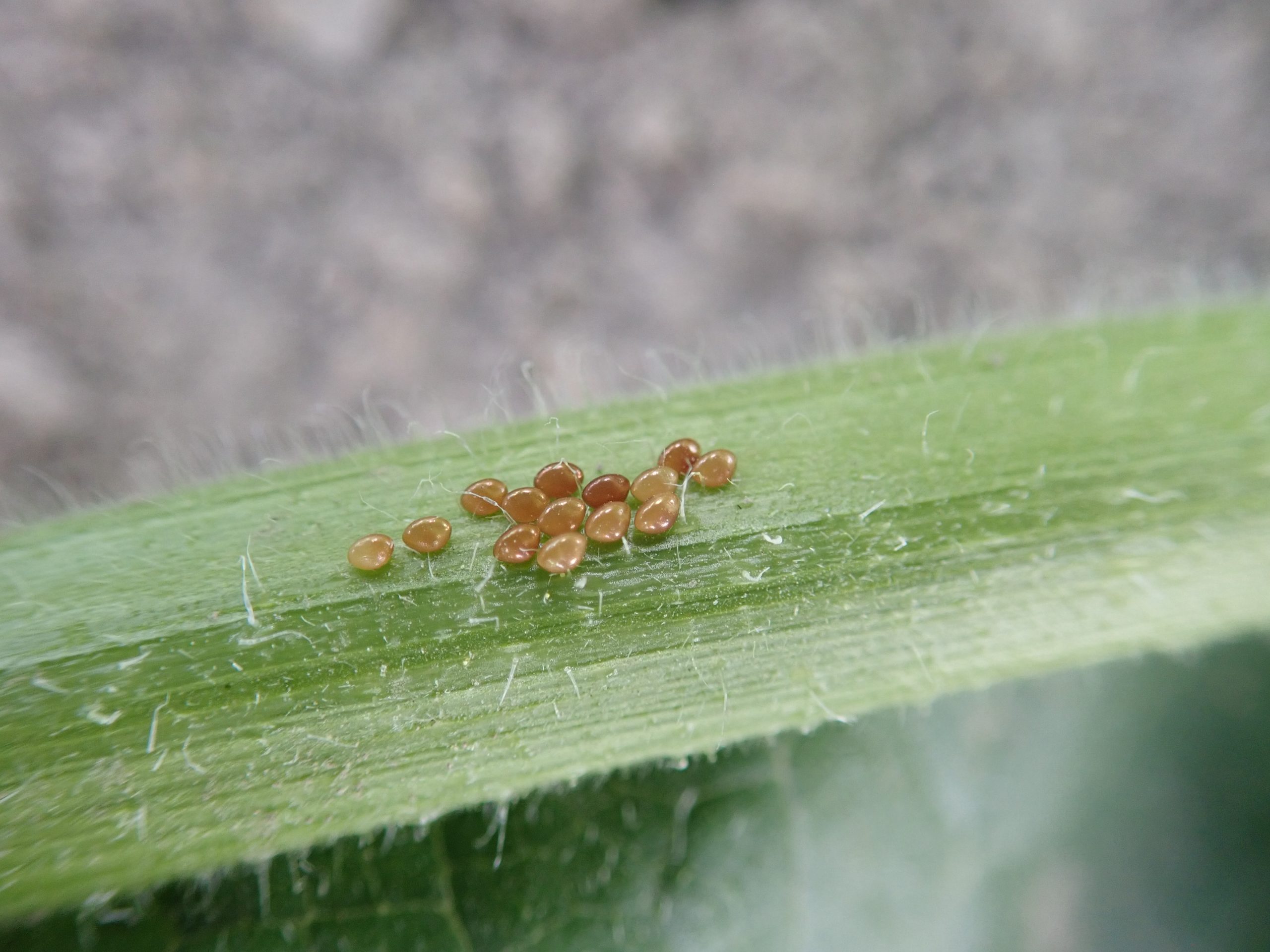
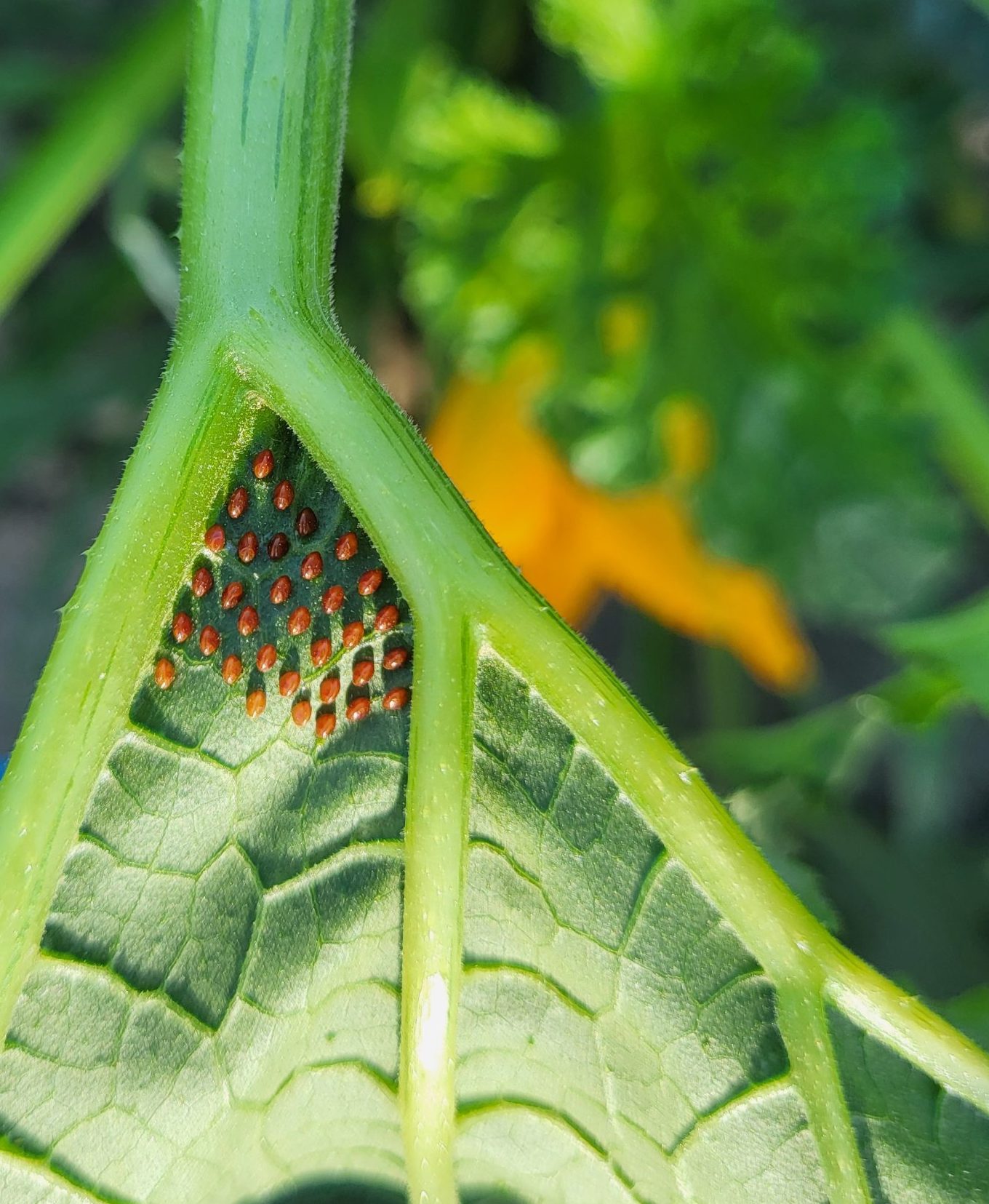
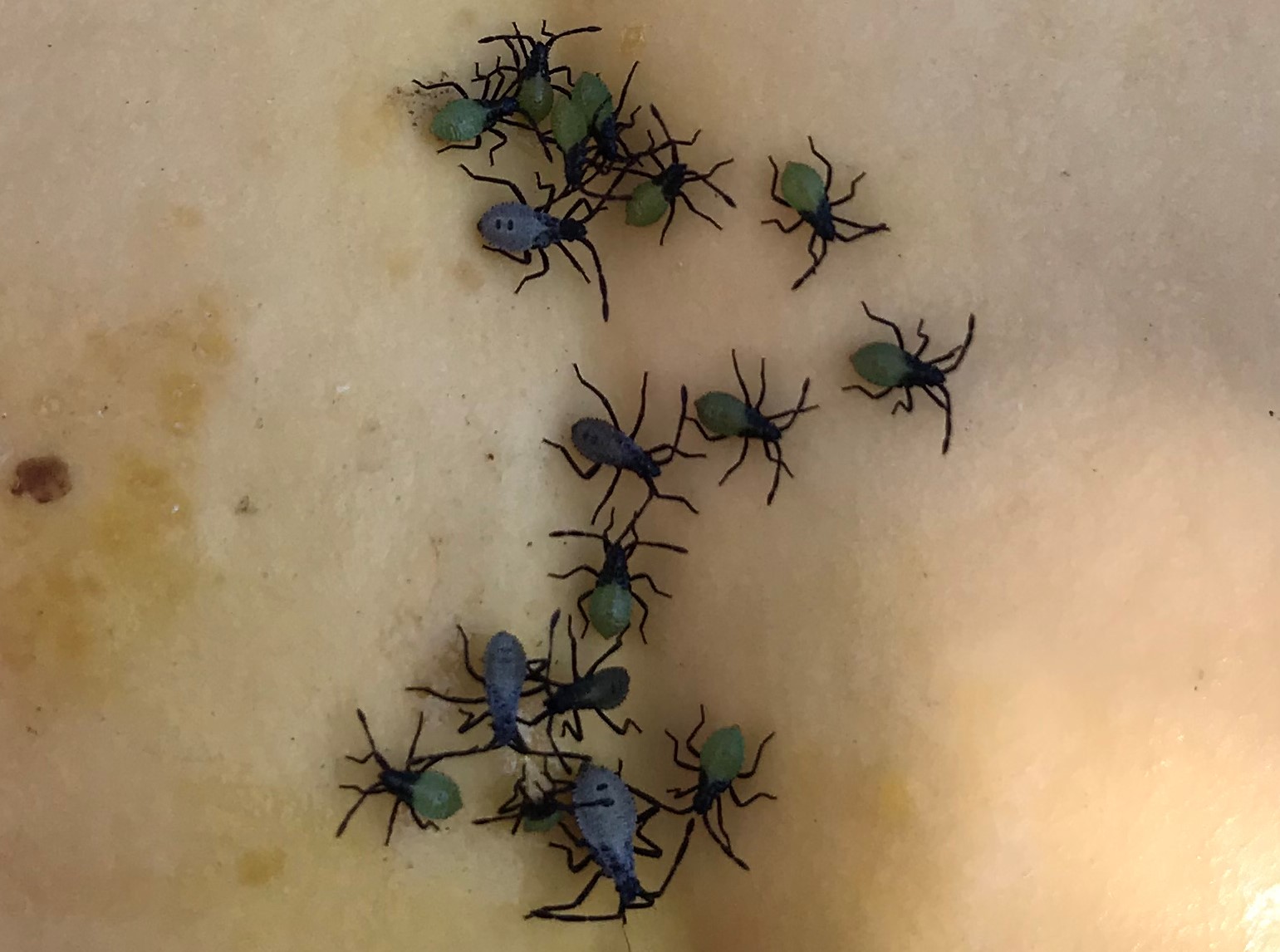
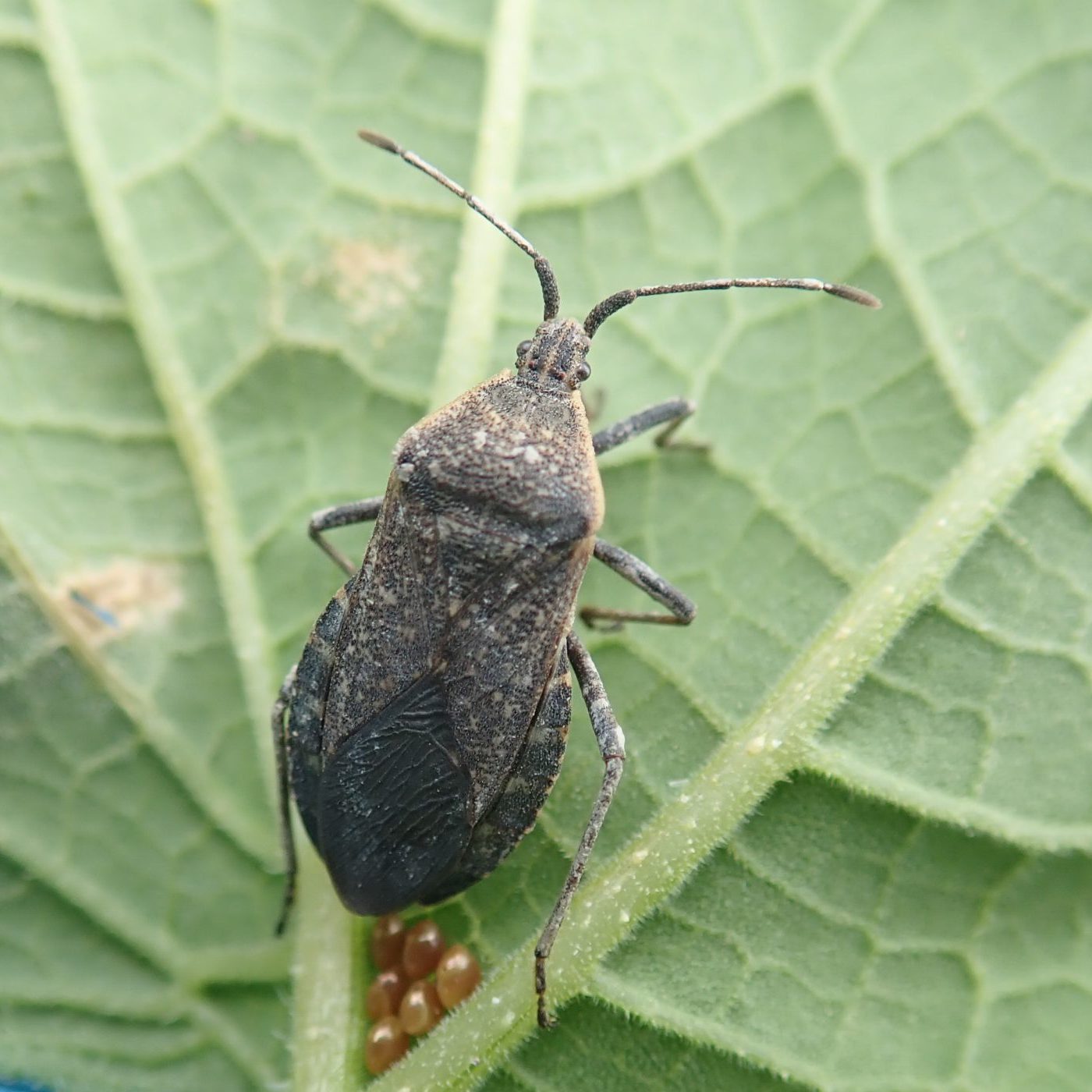
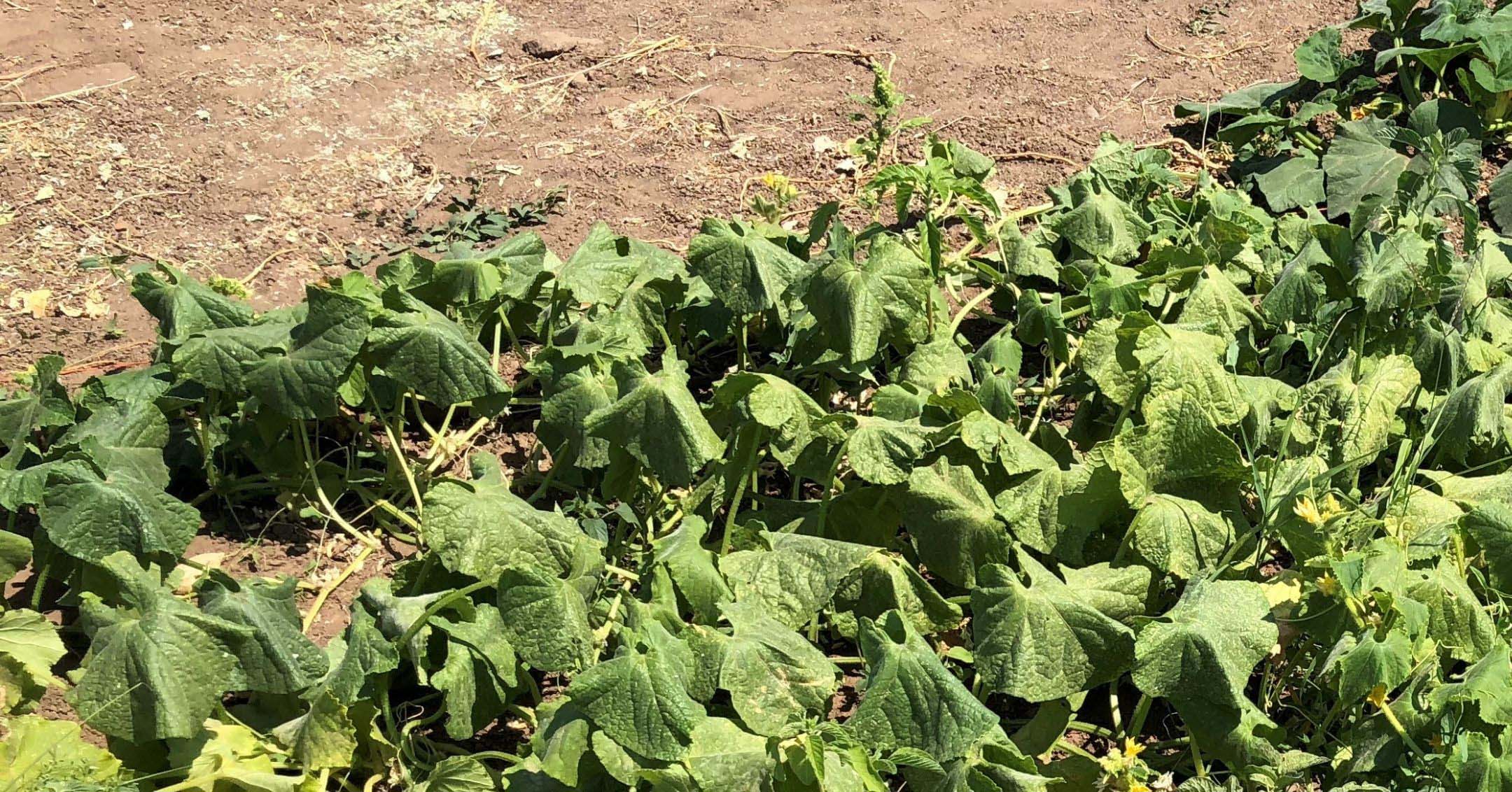
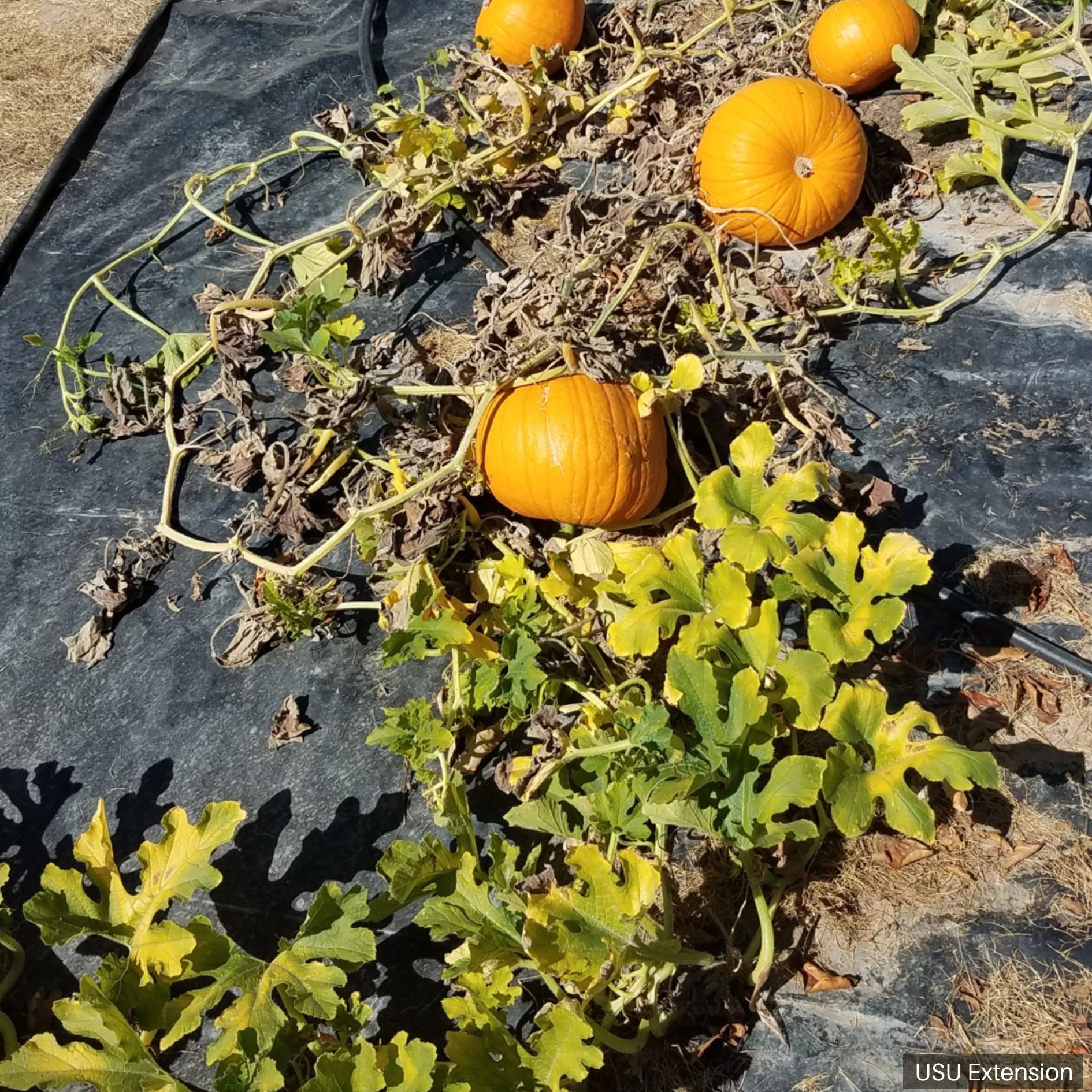
Squash bugs are hatching now. Scout crops weekly. Remove and destroy eggs, nymphs, and adults as possible. Target nymphs when using insecticides.
Crops Affected: Primarily pumpkin and squash. Also affects cucumber, melon, and other cucurbits.
Symptoms and Life cycle
Squash bug adults and nymphs remove large amounts of plant sap by feeding on leaves, vines, and fruit with piercing-sucking mouthparts. Symptoms from feeding include spots on leaves that are initially yellow and then turn brown, wilting foliage during the day, scars and sunken areas on fruit, and leaf dieback. Injuries to fruit from squash bugs reduce marketability and increase rot during storage. Squash bugs are not reported to vector plant diseases in Utah.
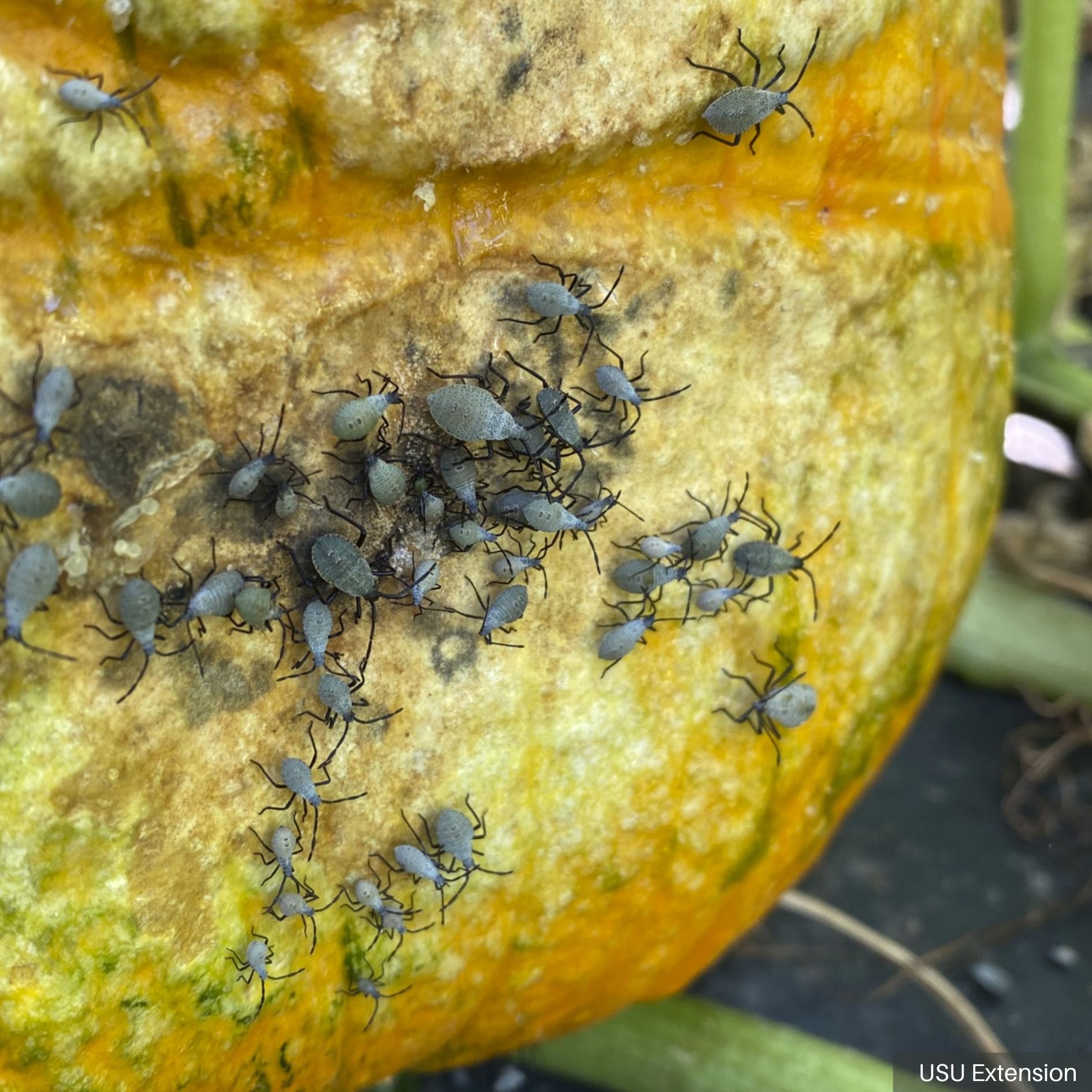
Squash bugs overwinter as unmated adults in protected sites under plant debris, in compost piles, and around building foundations. They emerge in spring (April in southern Utah and May in northern Utah) and fly to host plants. Overwintered adults feed on crop plants, mate, and then lay eggs that hatch in 10 to 14 days. A female can lay up to 250 eggs. Nymphs feed on hosts as they progress through 5 developmental stages (instars) and complete development in 4 to 6 weeks. The summer generation of adults appears in late June to July in northern Utah (3 to 4 weeks earlier in southern Utah), and feed on cucurbit hosts while they build energy reserves to survive the winter.
Management
- Scout fields or gardens weekly, taking time to examine the entire plant. Look on the undersides of leaves for eggs and newly hatched nymphs, and at the base of the plant or under dropped leaves for adults. An average of one egg cluster per plant is the economic threshold to apply an insecticide.
- Wilted plants should be removed and adjacent plants checked for squash bugs.
- Remove or kill eggs by using duct tape, cutting out the leaf section, or smearing eggs with oil. Adults and nymphs can be physically removed and thrown in soapy water. Each adult that is eliminated can reduce the future squash bug population by several hundred.
- Removing crop residue, rotating crops, and planting resistant varieties will aid in long term management of squash bugs.
- Adult squash bugs are hardy and difficult to kill with insecticides, so nymphs should be targeted after egg hatch. To be effective, insecticide sprays must penetrate the plant canopy and thoroughly cover the top and underside of leaves, fruits, and vines. This is more difficult to achieve with large plants, so insecticides should be applied before dense plant canopies are formed.
Click the following links for squash bug insecticide options in commercial or small-scale production of cucurbits. Or reference pages 89 to 91 (Table 5.6) for commercial production and pages 94 to 97 (Table 5.8) for home gardeners in the Utah Vegetable Production Guide.
Corn Earworm
Corn earworm moths begin flight soon. Monitor carefully and spray as needed while silks are green.
Crops Affected: Primarily corn. Also affects pepper and tomato (where it is called tomato fruitworm).

Symptoms and Life cycle
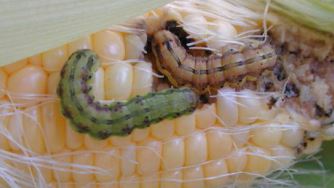
Corn earworm (CEW) larvae damage corn by feeding on developing kernels, silks, and sometimes leaves. Larvae may be found inside the ear when the husk is pulled back. Frass may be present at the ear tip, which can promote mold growth, attract sap beetles and earwigs, and reduce ear quality, appearance, and storage life.
The first generation of adults come from overwintering pupae in warmer climates, or as moths that migrate into cooler climates. Adults prefer to lay eggs singly on fresh, green corn silks. Female moths can lay up to 1,000 eggs. Moths will lay eggs on weeds and selected vegetables when corn silk is unavailable. This provides a population that is ready to attack corn as soon as silks are present. Eggs are creamy white, dome-shaped with ridges, and about half the size of a pinhead.
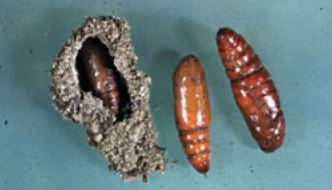
Eggs hatch in 2 to 10 days, depending upon the temperature. The newly hatched larva crawls down the corn silk and into the ear tip. It prefers to feed on the developing kernels in the ear but will also chew on silks and leaves. Damage to silks can decrease pollination and lead to poor ear fill. The larva feeds within the ear for 10 to 14 days, then exits and drops to the ground. Larvae burrow 2 to 5 inches deep into the soil and pupate. The pupa is cylindrical, brown, about 1 inch long, and remains in the soil as a resting phase. The adult moth emerges within 10 to 25 days during the summer. Pupae formed in late summer may overwinter in warmer climates, otherwise they are killed by cold winter temperatures.
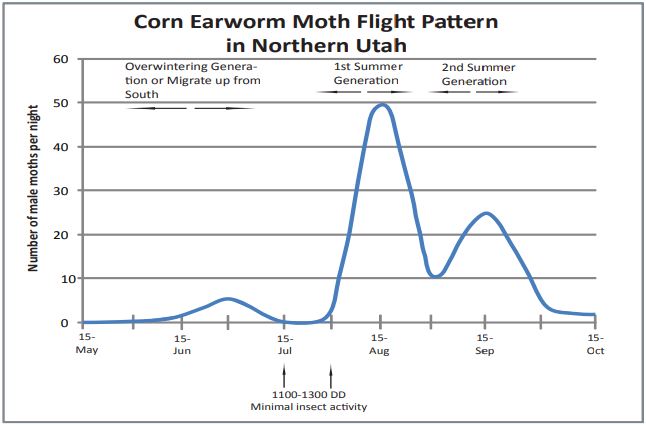
There are typically three flights per year in northern Utah. The first flight is small and begins from mid-June to early July. The second and third flights are much larger and occur during August and September, respectively. In northern Utah, most first-generation moths immigrate from overwintering sites in central and southern Utah. However, fields with high levels of larvae in the fall tend to have higher levels of infestation the next spring supporting the hypothesis that some pupae survive cooler winters. In southern Utah, the first flight occurs 3 to 4 weeks earlier than in the north, and there may be a fourth generation each year.
Management
The CEW is best monitored using a pheromone lure within a trap. The lure consists of a synthetic version of the female sex attractant and thus attracts male moths. Two trap options are a bucket trap or the traditional Heliothis trap, which is cone-shaped and made of vinyl mesh netting. Some guidelines for using traps are:
- Traps and pheromone lures may be purchased online. Replace the lure every 2 to 3 weeks (following manufacturer guidelines).
- Place the trap along the edge of a corn field and attach the trap to a stake or post. For the Heliothis trap, make sure the bottom of the trap is about the same height as the corn silk.
- Check traps twice weekly until first catch, then check daily or every other day for best results. Moths other than CEW may enter the trap but only count CEW moths.
- Calculate the average number of moths caught per night over the trapping interval. If the trap is checked daily, calculate the nightly average over a 3-to-4-day period to reduce the variance.
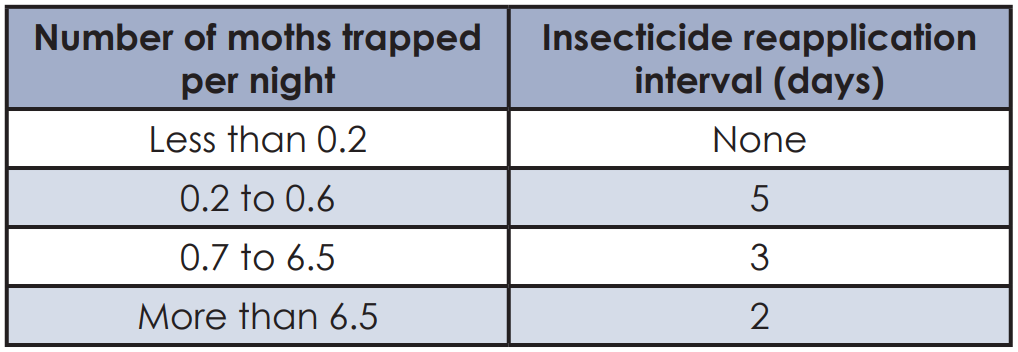
- A threshold level for control is 0.2 CEW moths per night.
- Move the trap to different areas of the field to keep it near fresh corn silk.
In corn, good control is dependent on applying an insecticide before larvae enter the ears. Start spraying within 2 days of the beginning of silking, or as indicated by trap counts. About half of the eggs are laid within 2 days of silk emergence, and the remainder of the eggs are laid by 9 days later. Reapply an insecticide to protect new silks. Silks grow about 1/2 inch per day. Once silks turn brown, they are no longer attractive as egg-laying sites.
Click the following links for corn earworm insecticide options in commercial or small-scale production of corn. Or reference pages 272 to 276 (Table 11.3) for commercial production and pages 278 to 282 (Table 11.5) for home gardeners in the Utah Vegetable Production Guide.
- Sweet corn planted early so that it will silk before major moth activity occurs may escape injury. Corn silking between first- and second-generation flights (July 20 to August 5 on average in northern Utah) may also not be damaged.
- Fall tillage of corn fields decreases survival of pupae. In locations where corn earworm pupae overwinter, fall tillage is an effective practice.
European Earwig
Earwigs congregate in wet, shady areas and populations build in mid to late summer. Only control if crop damage is observed, as earwigs can be beneficial. Control with cardboard or oil traps. If populations are unreasonably high, target with insecticide in the evening when earwigs come out to feed.
Crops Affected: Primarily corn and leafy greens. Also affects brassicas, cucurbits, and legumes.

Symptoms and Life cycle
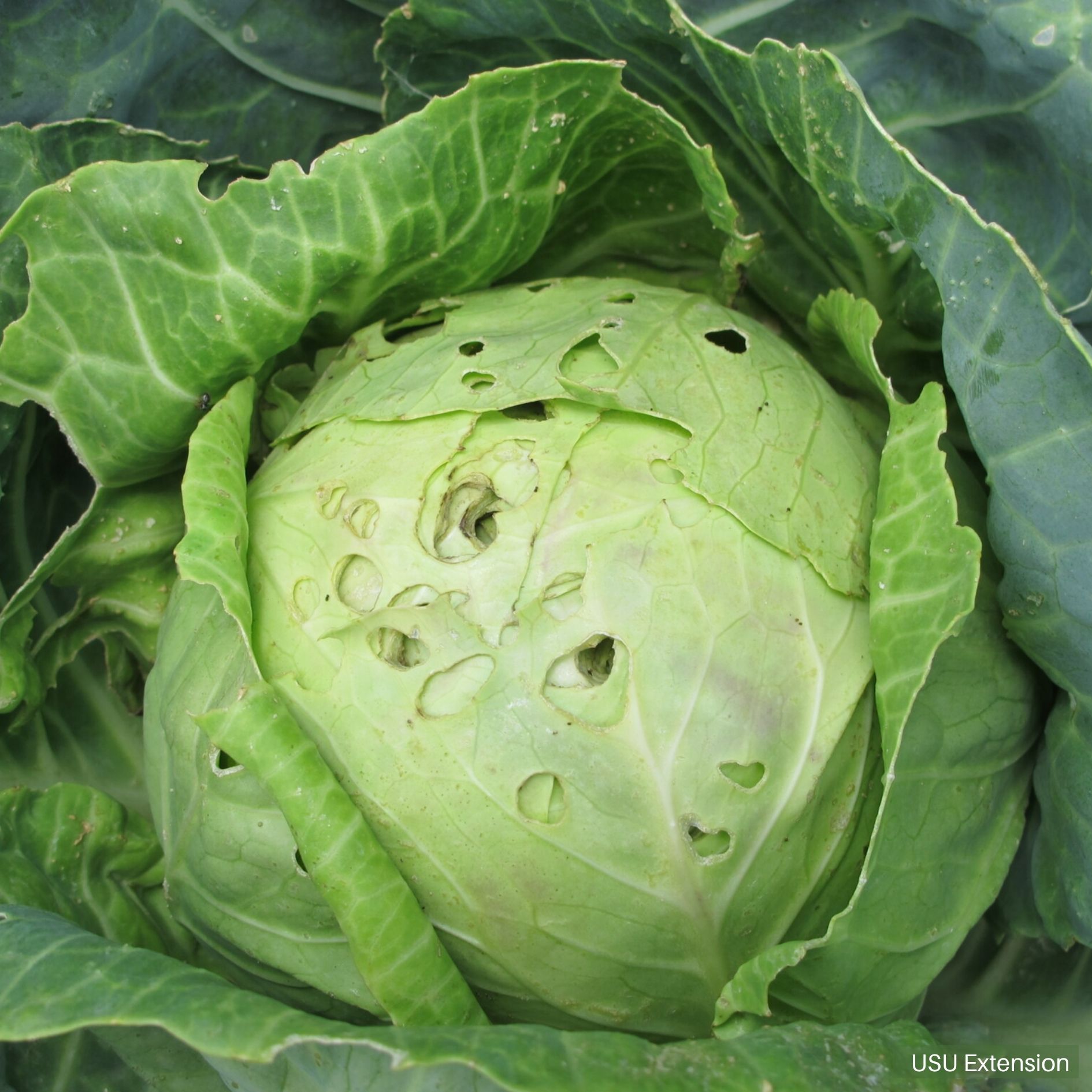
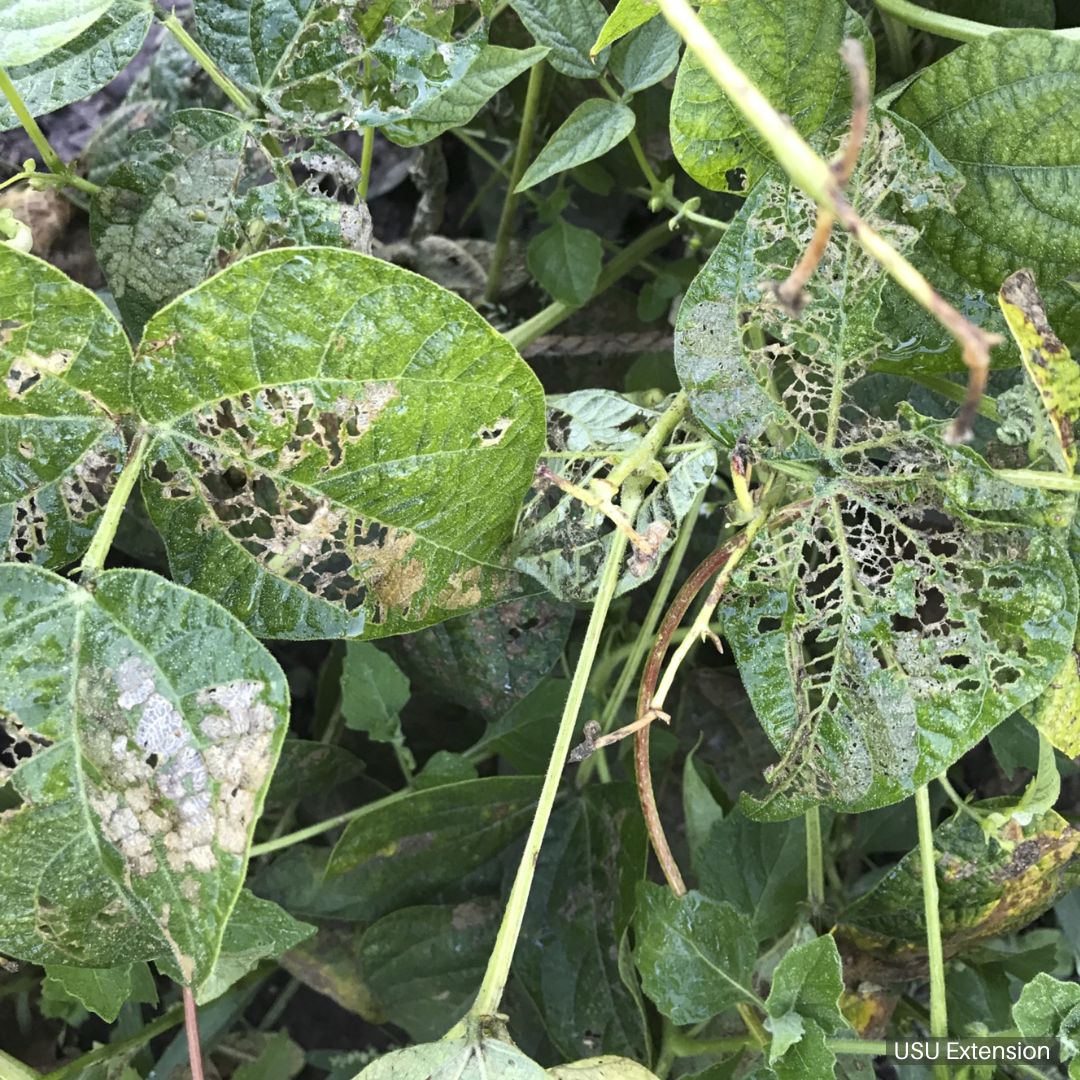
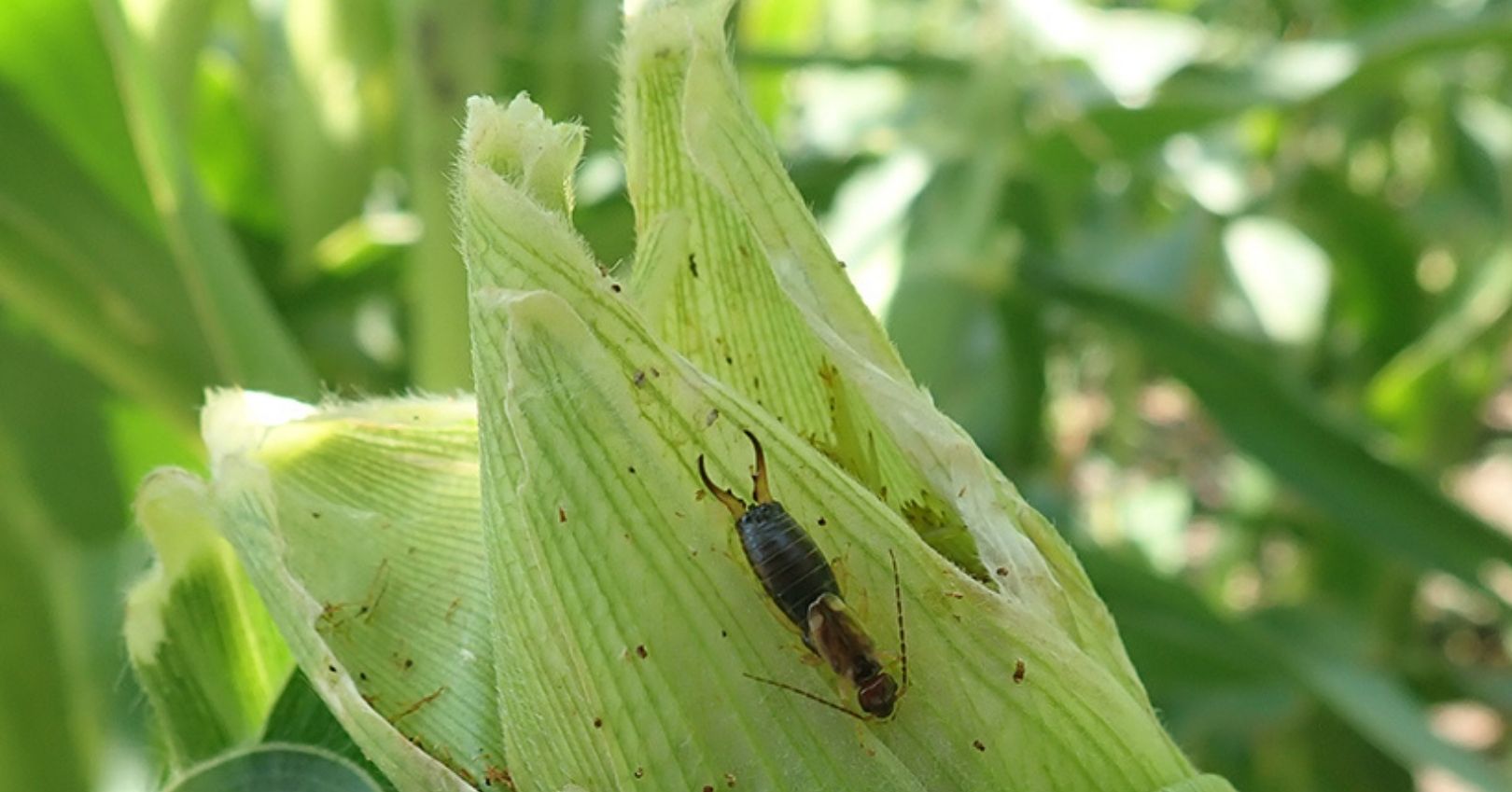
The European earwig feeds on decaying organic matter, fungi, small invertebrates, and plants. As opportunistic predators, they provide benefits by preying upon plant pests such as aphids, caterpillars, maggots, mites, and scales. In contrast, their herbivorous eating behavior makes them a common pest in vegetable crops. Earwigs feed on the buds, flowers, fruits, and leaves of plants causing direct damage, aesthetic injury, and reducing crop yields. In corn, they can feed on the silks of the ear and reduce pollination and ear fill. Earwig feeding damage from chewing appears as irregular holes and chewed edges on plant parts. They also leave behind frass in tight and dark spaces in and around plants.
In the western U.S., adults overwinter in the soil as brooding pairs or above ground in aggregations and can have two or more generations per year. In spring, females lay a clutch of 30 to 50 eggs in clusters in the soil. They may lay more than one clutch if resources are sufficient. Eggs begin to hatch in mid-May in northern Utah. Young nymphs remain in the nest where the mother protects them, and older nymphs disperse from the nest in search of food. Populations tend to build to their highest densities in mid to late summer. Earwigs are nocturnal and hide in dark, tight, and moist places during the daytime. In vegetable gardens, earwigs are most often found in highly irrigated or mulched areas.
Management
- Because earwigs are considered beneficial insects, only manage when there is unacceptable crop damage.
- Trapping is an effective management strategy. Cardboard and oil traps are simple ways to manage earwigs. See the video below for the process of constructing and deploying these traps.
- When pesticides must be applied, be sure to apply an effective insecticide in the late evening just before earwigs come out to feed.
Click the following links for earwig insecticide options in commercial or small-scale production of leafy greens. Or reference pages 126 to 128 (Table 6.6) for commercial production and pages 133 to 135 (Table 6.8) for home gardeners in the Utah Vegetable Production Guide.
Click the following links for earwig insecticide options in commercial or small-scale production of corn. Or reference pages 272 to 276 (Table 11.3) for commercial production and pages 278 to 282 (Table 11.5) for home gardeners in the Utah Vegetable Production Guide.
Beneficial Insect Spotlight: Collops Beetles
To enhance beneficial insect populations, consider reducing pesticide use and planting a variety of flowering plants that bloom throughout the season for habitat and food.
Collops beetles feed on aphids, butterfly/moth eggs and caterpillars, small lygus nymphs, mites, and whiteflies. They are also pollinators, as the adults consume pollen.
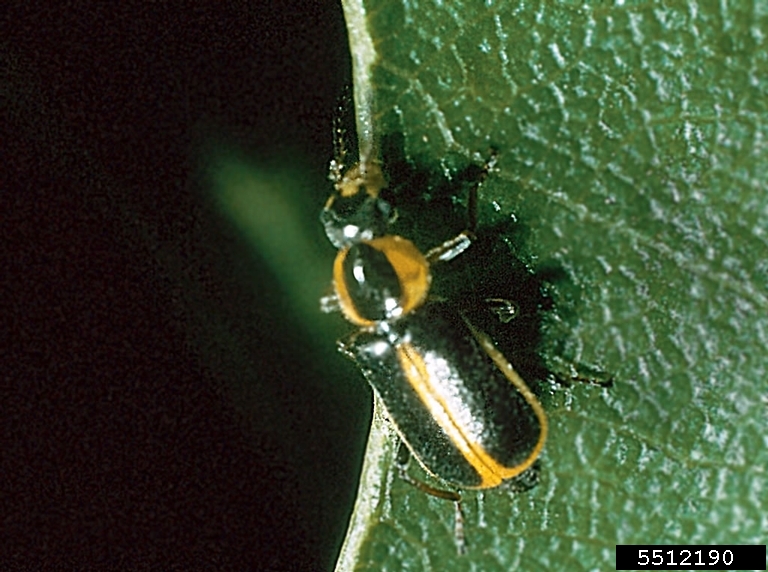
Adults are soft-winged beetles with bluish-black bodies and orange or red patches or stripes. The legs are slender and the antennae are saw-toothed. Eggs are yellow to pinkish-orange and spindle-shaped and larvae are pink to brownish-red.
Collops beetles overwinter as adults. In spring, eggs are laid in clusters on soil debris and sometimes on plants. Upon hatching, larvae feed on insects in the soil. There is typically one generation per year.
Collops beetles are mostly seen in fields and less frequently in vegetables. They can be important early to mid-season predators that help suppress the development of economic populations of a wide array of insects. Adults have a voracious appetite for aphids.